
Visible-NIR Mirror
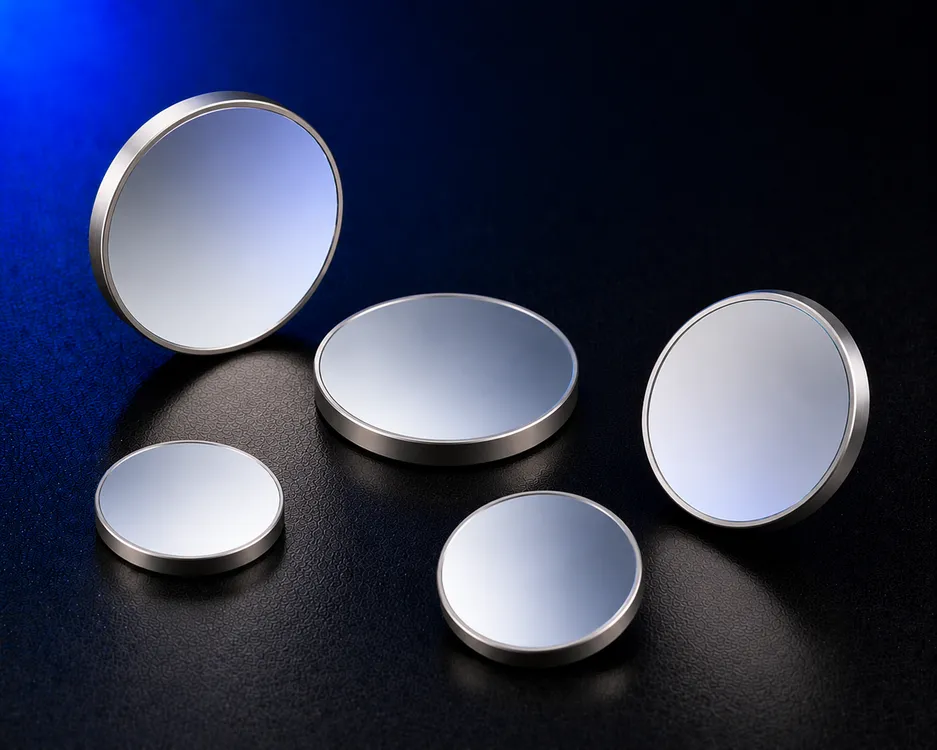
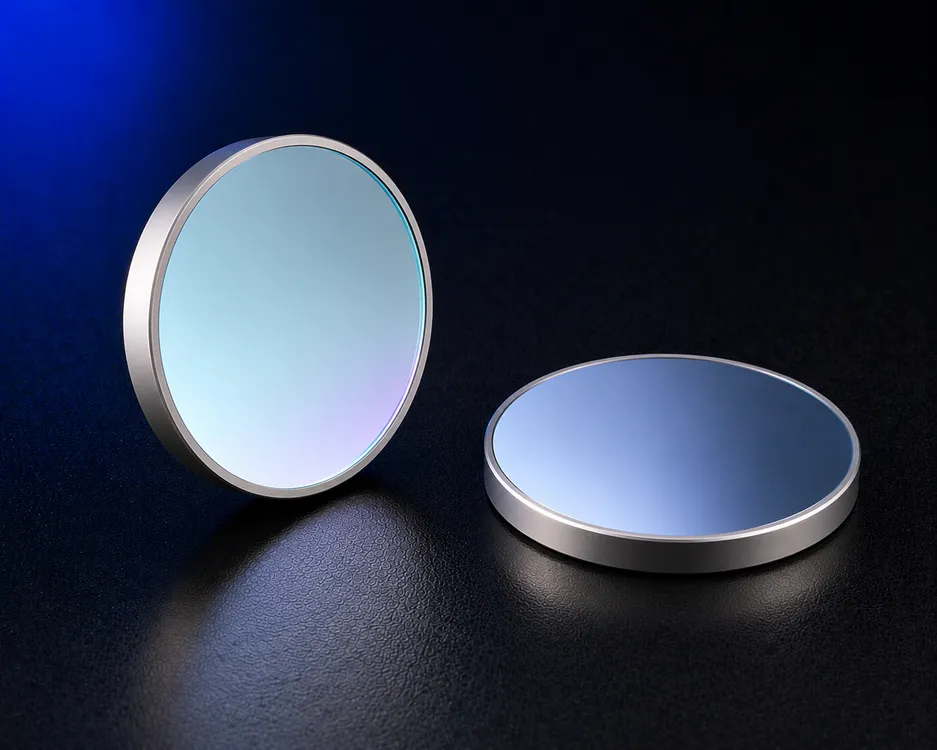
Chenyu Optics supplies custom Visible-NIR mirrors according to the required reflection band, average or minimum reflectivity, angle of incidence, S/P polarization condition, substrate, surface flatness, surface quality and coating durability. Final reflectivity is confirmed for the specified wavelength range and measurement conditions rather than treated as one universal value.
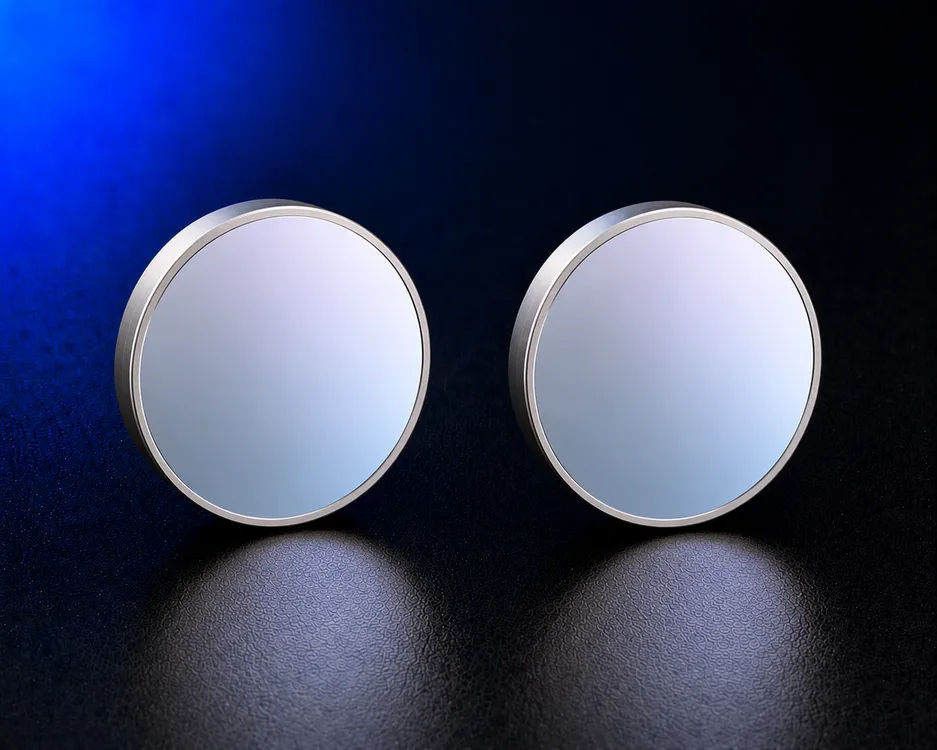
Visible-NIR Mirror Overview
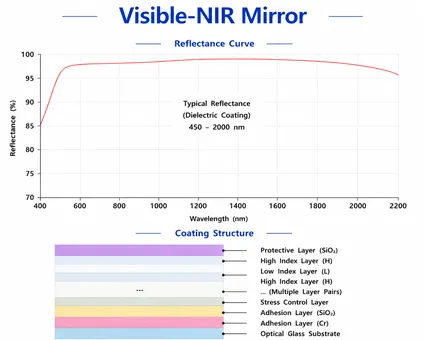
Visible-NIR Mirrors use a coating designed for a stated visible-to-near-infrared reflection band. The usable band must be defined numerically in the quotation or drawing.
Reflectivity may be specified as an average value across the band or a minimum value at every required wavelength. Angle of incidence and S/P polarization affect the coating response, particularly at non-normal incidence, and must be stated with the reflectivity requirement.
Chenyu Optics supports drawing-based Visible-NIR mirror production with substrate, dimensions, surface flatness, surface quality, clear aperture and coating durability requirements reviewed for prototype and repeat production.
Key Advantages of Visible-NIR Mirror
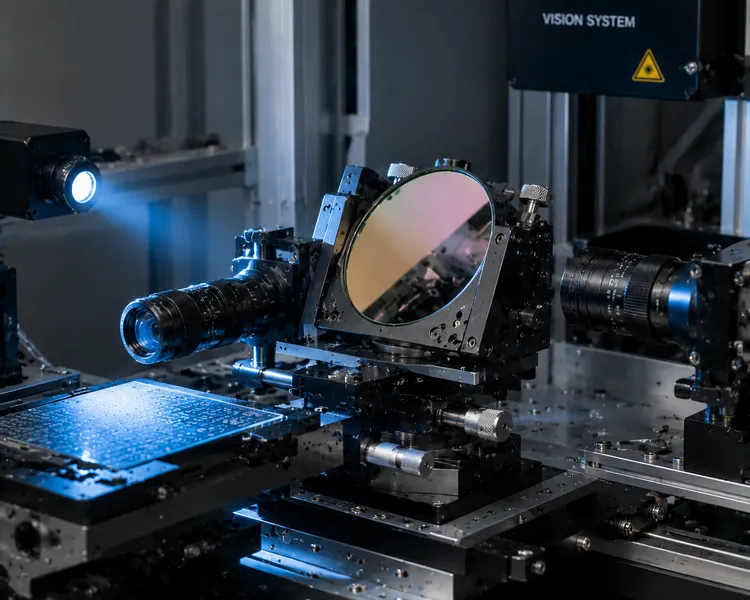
Laser, Imaging & Spectroscopy Systems
Visible-NIR mirrors provide stable reflection performance for laser optical systems, imaging instruments and spectroscopy equipment operating across visible and near-infrared wavelengths.
Typical Specifications of Visible-NIR Mirror
| Reflection Wavelength Band | Specified numerical wavelength range; available upon request |
|---|---|
| Average Reflectivity | Confirmed according to wavelength band, AOI, polarization and coating design |
| Minimum Reflectivity | Available upon request for the specified band and measurement conditions |
| Angle of Incidence | Specified by the customer optical system |
| Polarization | Unpolarized, S-polarized or P-polarized condition to be specified |
| Substrate | Optical glass, fused silica or other specified substrate; available upon request |
| Surface Flatness | According to drawing and agreed inspection method |
| Surface Quality | According to drawing and inspection requirements |
| Coating Durability | Defined according to handling, cleaning and operating-environment requirements |
| LIDT | Not stated as a standard value; provided only when supported by applicable test data or an agreed verification method |
| Reflectivity Inspection Method | Spectrophotometric measurement according to the specified wavelength range, AOI and polarization; report available upon request |
REFLECTANCE CURVE (TYPICAL, BY COATING)
Why Choose Chenyu Optics for Visible-NIR Mirror
Chenyu Optics focuses on drawing-based precision mirror manufacturing for laser, imaging, spectroscopy and industrial optical systems. We support prototype verification, small-batch production and repeat manufacturing for non-standard Visible-NIR mirrors.

Manufacturing Capability for Visible-NIR Mirror
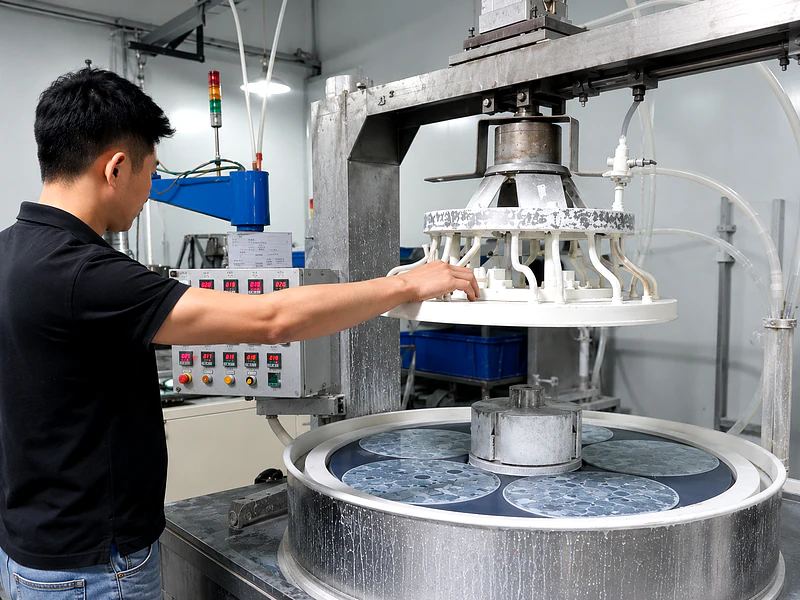
Precision Polishing
Substrate surfaces and dimensions are processed according to the approved flatness, surface quality and drawing requirements.
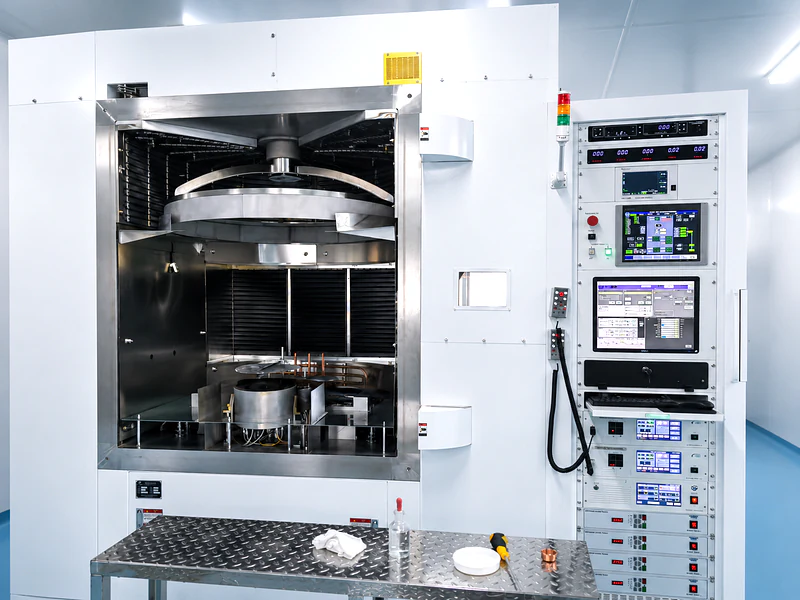
Dielectric Coating
Coating requirements are reviewed according to reflection band, reflectivity definition, angle of incidence, polarization and durability requirements.
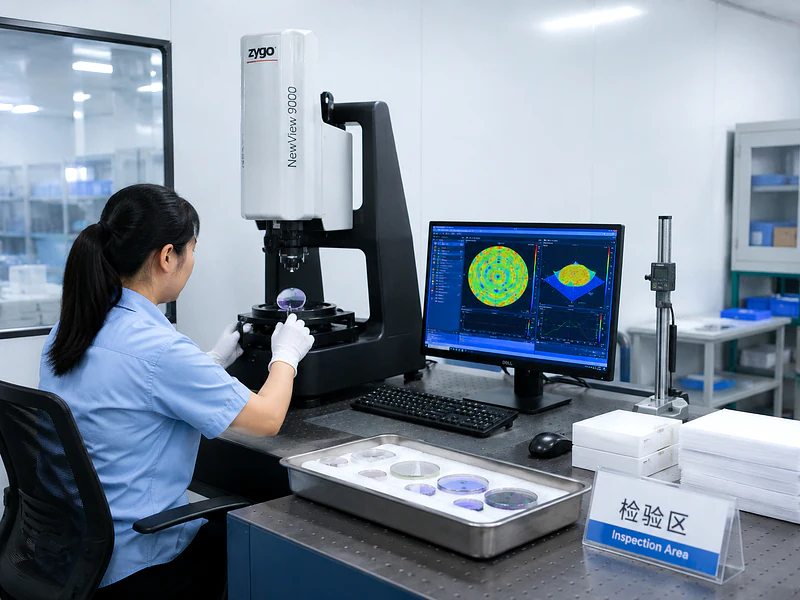
Inspection & Packaging
Dimensional and reflectivity inspection follows the agreed wavelength, AOI, polarization and reporting conditions, followed by protective packaging.
Custom Manufacturing Options for Visible-NIR Mirror
Dimensions & Geometry
Custom size and edge form can be manufactured according to customer drawings, with substrate material selected for optical and mechanical requirements.
Surface & Mechanical Quality
Surface accuracy and surface quality can be selected according to beam quality requirements and mounting structure.
Coating & Wavelength Range Design
Dielectric, broadband and laser line mirror coatings can be specified according to the operating wavelength range, angle of incidence and polarization requirements.
Visible-NIR Mirror Selection Comparison
| Selection Factor | Visible-NIR Mirror | Broadband Dielectric Mirror | Protected Aluminum Mirror | Laser Line Mirror |
|---|---|---|---|---|
| Spectral Design | Specified visible-to-NIR reflection band | Broad dielectric reflection range defined by coating design | Broad metallic reflection across UV/VIS/NIR regions, depending on design | Narrow wavelength or defined laser-line range |
| Reflectivity | Specified as average or minimum across the required VIS-NIR band | Confirmed for the designed broadband range | Lower than many dielectric designs but covers a wider spectral range | Optimized for the specified laser wavelength and AOI |
| AOI & Polarization | Must be specified for coating review | Must be specified, especially at non-normal incidence | Generally less spectrally selective, but AOI still affects system behavior | Critical to reflectivity and laser-line performance |
| Choose When | The system needs a defined visible-to-NIR band with controlled dielectric reflectivity | A wider dielectric reflection band is required | Broad spectral coverage and metallic-mirror behavior are more important than maximum dielectric reflectivity | The system operates at one laser line or a narrow laser wavelength range |
Applications of Visible-NIR Mirror
Laser Optical Systems
VIS-NIR reflective optics for laser system beam paths.
Imaging Systems
Visible-NIR mirrors for imaging instruments requiring consistent broadband reflection.
Optical Instruments
Precision reflective components for general-purpose optical instrument design.
Spectroscopy Equipment
Reflective optics for spectroscopic measurement across visible and near-infrared bands.
Beam Steering Assemblies
Stable VIS-NIR reflection for beam direction control.
Machine Vision Systems
Reflective optics for machine vision equipment requiring broadband VIS-NIR performance.
Visible-NIR Mirror FAQ
What wavelength range do Visible-NIR mirrors support?
Visible-NIR mirrors are designed for reflection applications covering visible and near-infrared wavelength regions.
What is the difference between a Visible-NIR mirror and a broadband mirror?
Visible-NIR mirrors are optimized specifically for visible and near-infrared reflection, while broadband mirrors may cover wider spectral ranges.
Can Visible-NIR mirrors be used in laser systems?
They can be reviewed for laser systems when wavelength, angle of incidence, polarization, beam conditions and coating requirements are specified. LIDT should only be stated when supported by applicable test data or an agreed verification method.
Can the mirror size and coating be customized?
Yes. Custom dimensions, substrates, coating ranges, and optical specifications are available.
What information should I provide for a quotation?
Please provide the reflection wavelength band, average or minimum reflectivity, angle of incidence, S/P polarization condition, substrate, dimensions, surface flatness, surface quality, coating durability requirement, quantity and drawing. Include an LIDT requirement only with defined laser and test conditions.
Where can I learn more about VIS-NIR mirror coatings?
Additional information on VIS-NIR mirror coatings can be found from Edmund Optics.
Related Products for Visible-NIR Mirror
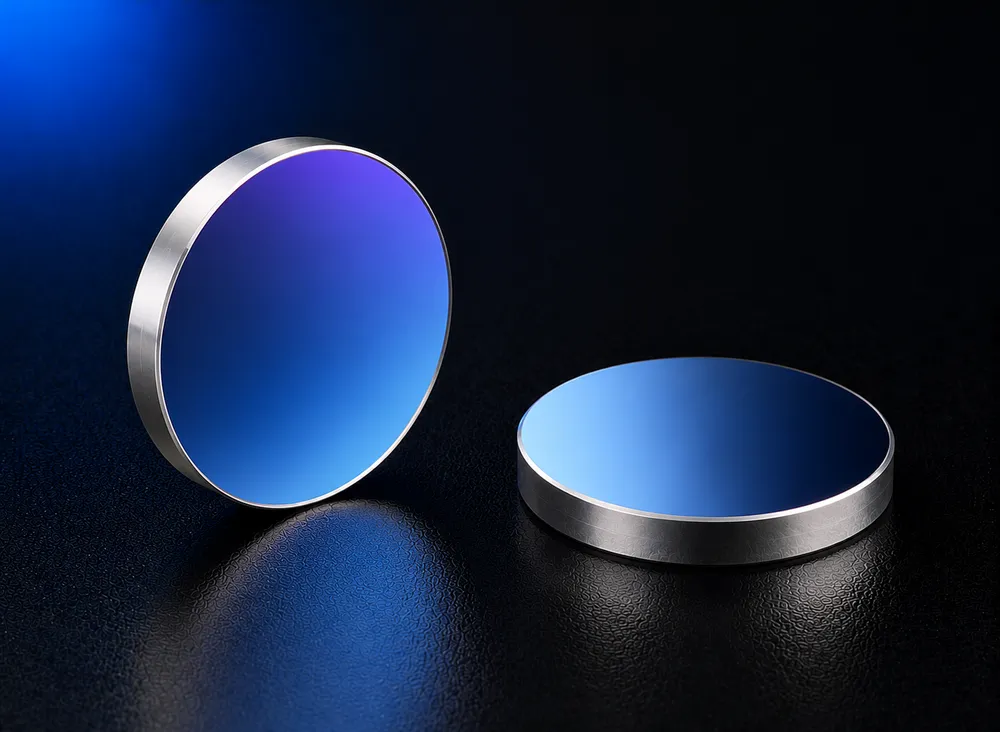
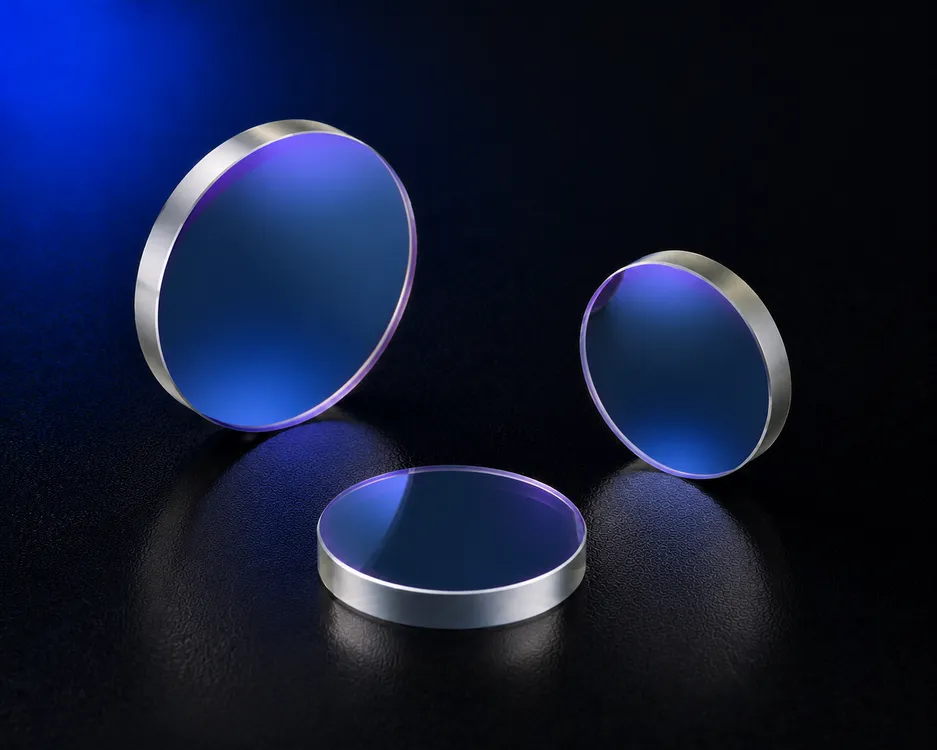
Need Custom Visible-NIR Mirrors?
Send us your drawing, reflection wavelength band, average or minimum reflectivity, angle of incidence, S/P polarization condition, substrate, dimensions, surface flatness, surface quality, coating durability requirement and quantity. If LIDT is required, also provide the laser wavelength, pulse duration, repetition rate, beam size and test requirement.