
UV Grade Calcium Fluoride Windows
Choose calcium fluoride when one window must transmit from the ultraviolet into the mid-infrared, beyond the useful infrared range of fused silica. CaF₂ offers broad transmission, low absorption and good chemical stability for UV, excimer-laser, spectroscopy and infrared systems, while fused silica is generally preferred when lower thermal expansion, greater scratch resistance or repeated thermal cycling is more important. CaF₂ is softer and more sensitive to thermal shock than fused silica, so machining, cleaning, transport and installation require controlled handling and mechanical protection. UV/VUV-grade single crystal is selected for demanding short-wavelength use; IR-grade material may have reduced UV performance, and the final grade should be specified from the operating wavelength, absorption and inspection requirements.
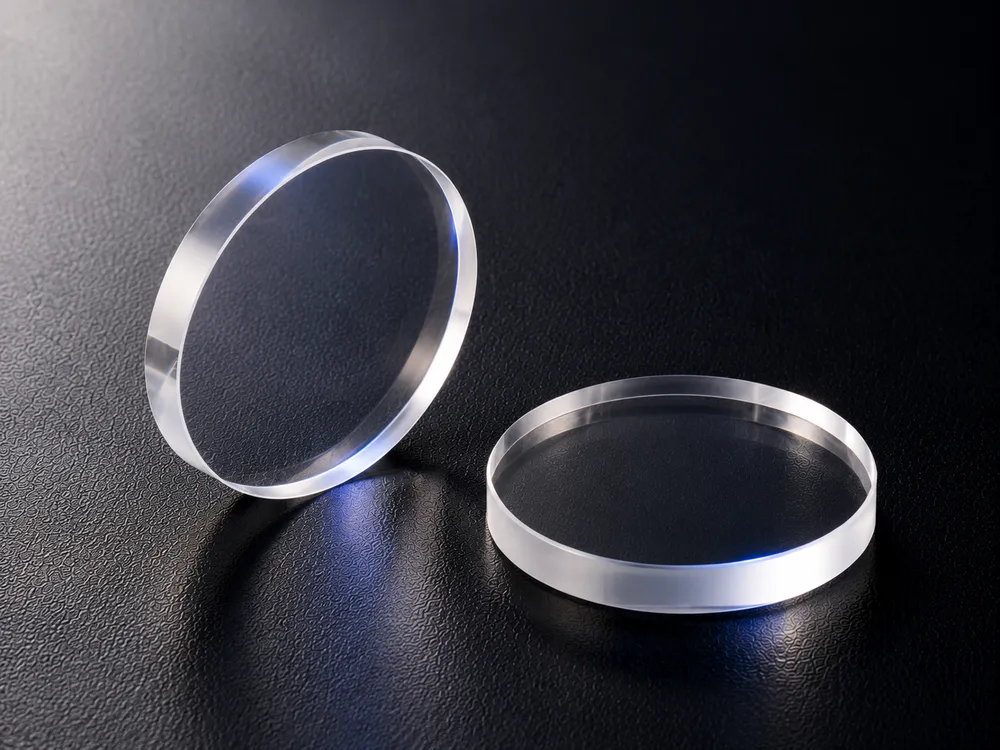
UV Grade Calcium Fluoride Windows Overview
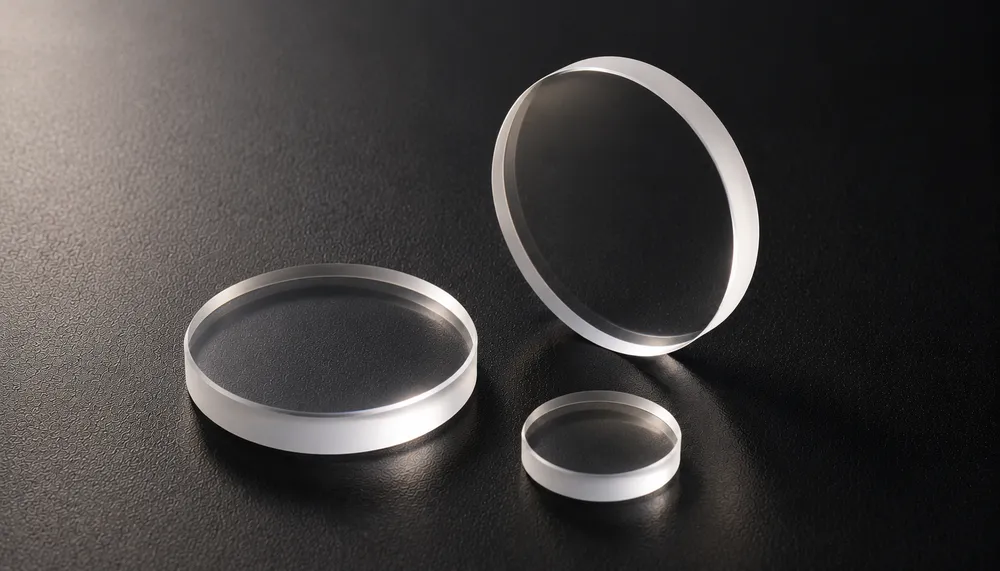
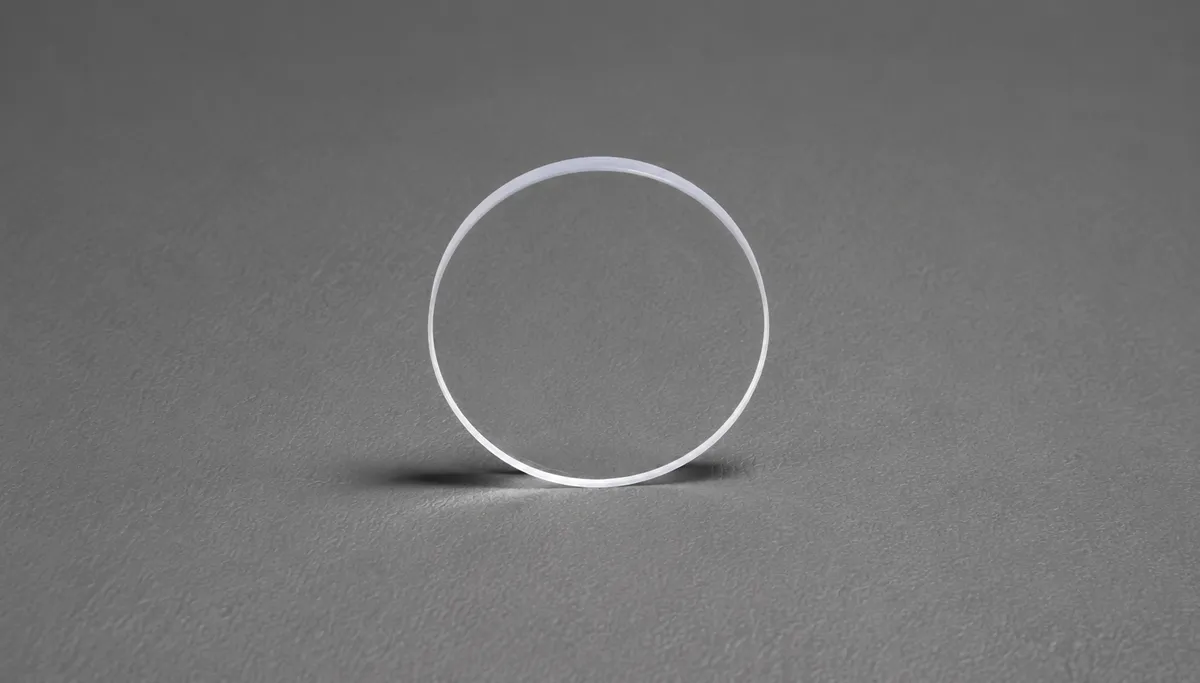
UV Grade Calcium Fluoride (CaF₂) Windows are precision optical components manufactured from high-purity calcium fluoride single crystal material.
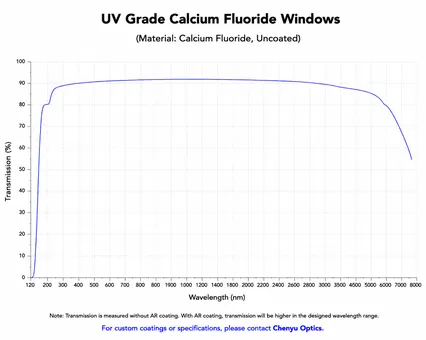
With excellent ultraviolet transmission, low absorption and broadband transmission from approximately 0.13–8 μm, CaF₂ windows provide reliable optical performance across UV, visible and infrared wavelengths. Due to their excellent UV transmission and low dispersion characteristics, UV grade calcium fluoride windows are widely used in UV spectroscopy, excimer laser systems, UV imaging and precision optical instruments.
Chenyu Optics supports custom UV grade CaF₂ window manufacturing according to customer drawings, including custom diameter, thickness and coating design for prototype and repeat production.
Key Advantages of UV Grade Calcium Fluoride Windows
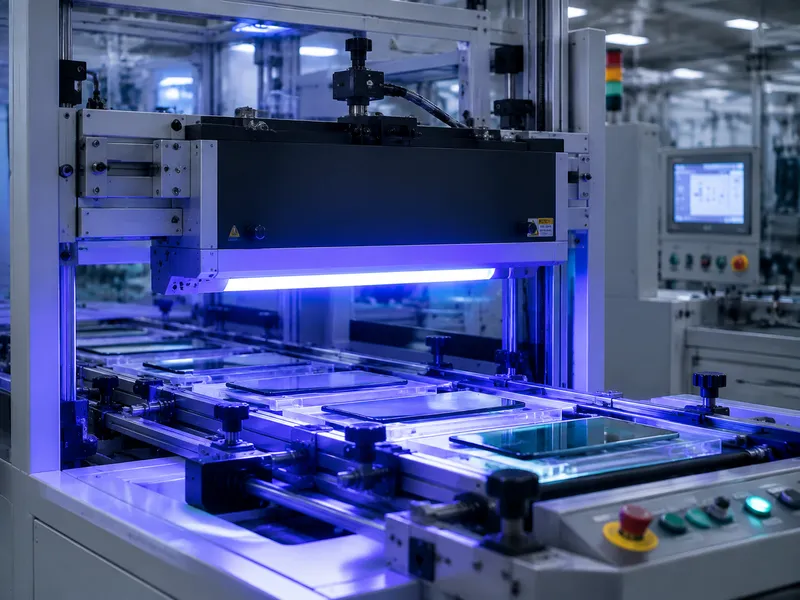
UV Spectroscopy & Excimer Laser Systems
UV grade calcium fluoride windows are widely used for high-transmission UV performance in spectroscopy systems, excimer laser setups and precision UV imaging equipment.
Why Choose Calcium Fluoride Optical Windows?
| Property | Calcium Fluoride | Fused Silica |
|---|---|---|
| Transmission Range | Broad UV-to-mid-IR transmission; approximately 0.13–8 μm for suitable optical grade | Typically UV to near-IR; approximately 0.185–2.1 μm depending on grade |
| UV Performance | UV/VUV-grade single crystal supports demanding short-wavelength applications | Strong UV performance with appropriate UV-grade fused silica; grade selection remains important |
| IR Performance | Extends into the mid-infrared and supports broadband UV-IR systems | More limited infrared range; generally selected for UV, visible and near-IR systems |
| Thermal Characteristics | Sensitive to rapid temperature change; controlled heating, cooling and mounting are required | Very low thermal expansion and generally preferred for repeated thermal cycling |
| Mechanical Hardness | Relatively soft and susceptible to scratching, edge damage and cleavage | Harder and more resistant to routine handling damage |
| Chemical Stability | Stable and low-hygroscopicity under normal conditions; polished surfaces still require careful cleaning | Strong chemical durability for many laboratory and industrial environments |
| Typical Applications | UV/VUV optics, excimer lasers, spectroscopy, thermal imaging and infrared instruments | UV laser systems, imaging, semiconductor equipment and thermally demanding optical assemblies |
Typical Specifications of UV Grade Calcium Fluoride Windows
| Material | Calcium Fluoride (CaF₂), single crystal |
|---|---|
| Crystal Grade | UV/VUV grade or application-specific grade; depends on operating wavelength and supplier capability |
| Crystal Orientation | Available upon request, when orientation is relevant to the component design |
| Transmission Range | Approx. 0.13–8 μm for suitable optical grade; actual transmission depends on grade and thickness |
| Wavelength Range | Specified operating wavelength or wavelength band |
| Size Range | Available upon request |
| Thickness Range | Available upon request |
| Thickness Tolerance | Available upon request |
| Surface Quality | 20-10 or 40-20 scratch-dig, subject to drawing review and inspection requirements |
| Surface Flatness | Up to λ/10 @ 633 nm, subject to size, thickness and drawing review |
| Parallelism | Available upon request |
| Clear Aperture | Available upon request |
| Edge / Chamfer | Available according to drawing |
| Coating Options | Uncoated, AR, UV AR, IR AR or custom wavelength coating |
| Inspection Method | Dimensional inspection, visual surface inspection, interferometric testing and spectral testing as specified |
Spectral Transmission Curve (Typical)
Available Coating Options
AR Coating
Selected for the specified operating band to reduce surface reflection and improve transmission.
UV AR Coating
Designed for ultraviolet wavelengths according to the required band and angle of incidence.
IR AR Coating
Specified for near- or mid-infrared transmission requirements.
Custom Wavelength Coating
Designed around the customer's wavelength range, angle of incidence and environmental requirements.
Why Choose Chenyu Optics for UV Grade Calcium Fluoride Windows
Chenyu Optics focuses on drawing-based precision crystal window manufacturing for UV, laser and broadband optical systems. We support prototype verification, small-batch production and repeat manufacturing for non-standard UV grade CaF₂ windows.
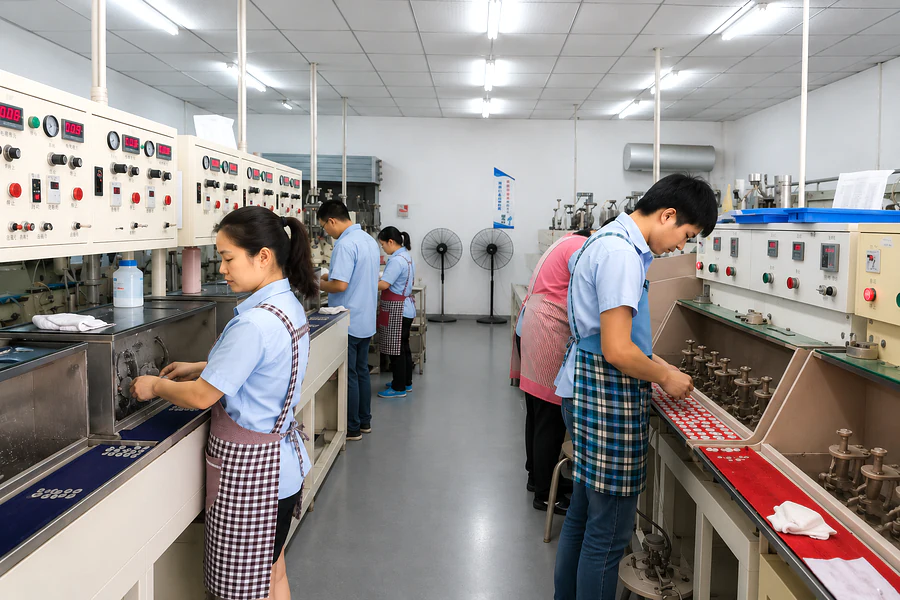
Manufacturing Capability for UV Grade Calcium Fluoride Windows
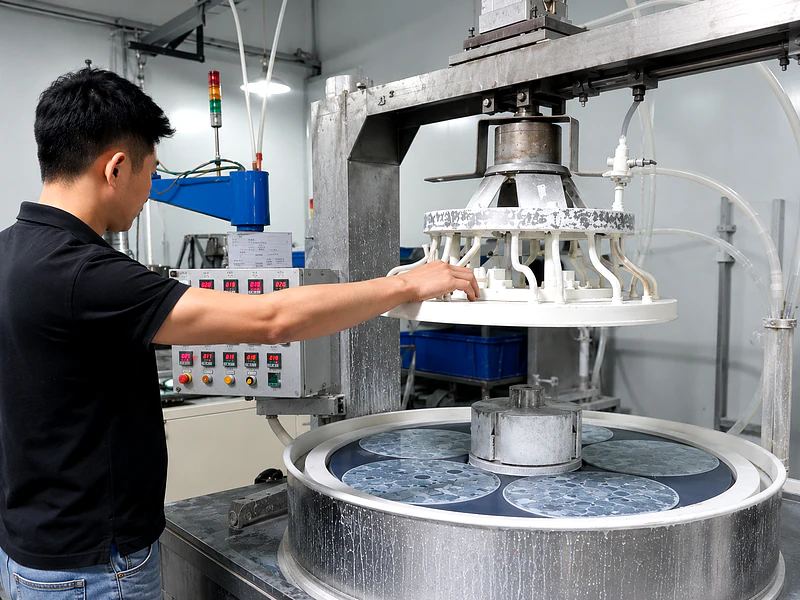
Precision Polishing
Careful grinding and polishing procedures suited to relatively soft CaF₂ crystal material.
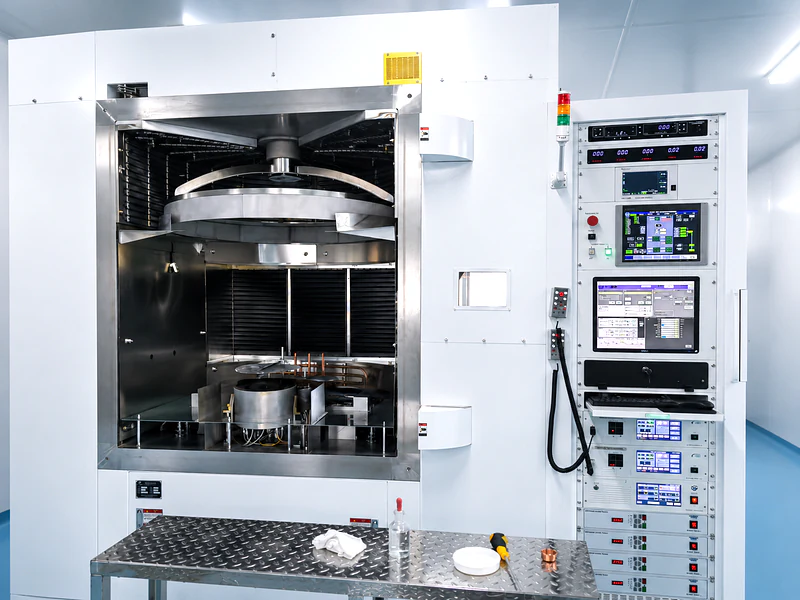
Optical Coating
UV AR, VIS AR and NIR AR coating options for UV spectroscopy and laser applications.
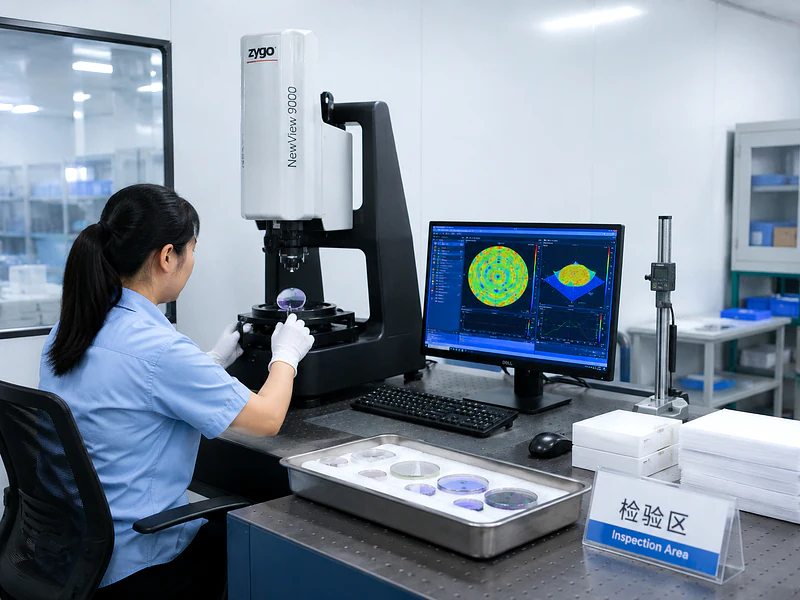
Inspection & Packaging
Dimensional inspection, surface review, optical performance checking and protective packaging before shipment.
Custom Manufacturing Options for UV Grade Calcium Fluoride Windows
Dimensions & Geometry
Custom diameter and thickness can be manufactured according to customer drawings, with standard or custom window shapes.
Surface & Mechanical Quality
Surface flatness, surface quality and edge treatment can be selected according to optical performance requirements, with attention to the material's mechanical softness.
Coating & Wavelength Design
Uncoated, UV AR, VIS AR, NIR AR and custom AR coatings can be specified for UV, visible or infrared applications.
UV Grade Calcium Fluoride Material Comparison
| Calcium Fluoride (CaF₂) | Barium Fluoride (BaF₂) | Sapphire | Magnesium Fluoride (MgF₂) | |
|---|---|---|---|---|
| Transmission | UV to MWIR, approx. 0.13 – 8.0 μm | UV to IR, approx. 0.2 – 12 μm | UV to MWIR, commonly 0.2 – 5.5 μm | Deep UV to IR, approx. 0.12 – 7.5 μm |
| Refractive Index | Approx. 1.43 @ 1 μm | Approx. 1.46 @ 1 μm | Approx. 1.76 | Approx. 1.38, low index |
| Mechanical Notes | Relatively soft and brittle, low hygroscopicity | Soft, slight hygroscopicity, avoid prolonged moisture exposure | Very hard and chemically durable | Relatively soft and brittle, low to moderate hygroscopicity |
| Typical Use | UV spectroscopy, excimer laser optics | Broadband UV-IR spectroscopy, thermal imaging | Protective windows, harsh environment optics | Deep UV optics, beam expansion, laser divergence control |
Applications of UV Grade Calcium Fluoride Windows
UV Optical Systems
Selected for broadband UV transmission when the specified grade supports the required short wavelength.
Excimer Laser Systems
Low absorption and UV-grade material options support excimer-laser beam delivery and protection windows.
Spectroscopy
The broad UV-to-mid-IR range can reduce material changes across multi-band spectroscopic instruments.
Thermal Imaging
Mid-infrared transmission makes CaF₂ suitable for selected cooled and broadband thermal-imaging systems.
Infrared Instruments
Used where fused silica does not provide sufficient transmission at the required infrared wavelength.
Laser Systems
Specified when wavelength coverage, absorption and coating design suit the laser operating conditions.
UV Grade Calcium Fluoride Windows FAQ
Why is calcium fluoride used for UV optical windows?
Calcium fluoride provides excellent UV transmission, low absorption, and low dispersion, making it suitable for ultraviolet optical systems.
What wavelength range does UV grade CaF₂ support?
UV grade calcium fluoride typically provides transmission from approximately 0.13–8 μm.
Can CaF₂ windows be used in excimer laser systems?
Yes. CaF₂ is commonly used in UV laser systems due to its excellent ultraviolet transmission characteristics.
Can UV grade calcium fluoride windows be customized?
Yes. Chenyu Optics provides customized dimensions, surface quality, thickness, and AR coating options.
What information should I provide for a quotation?
Please provide the operating wavelength, material or crystal grade, dimensions, thickness, thickness tolerance, surface quality, surface flatness, parallelism, clear aperture, edge or chamfer requirement, coating, quantity, operating temperature range and drawing if available.
Where can I learn more about infrared optical materials?
Additional infrared optical material information can be found from Edmund Optics.
Related Products for UV Grade Calcium Fluoride Windows
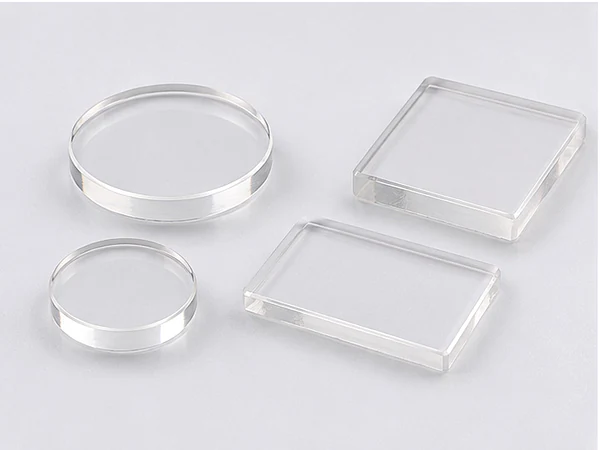
Need Custom UV Grade Calcium Fluoride Windows?
For quotation, please provide the operating wavelength, crystal grade, dimensions, thickness and tolerance, surface quality, flatness, parallelism, clear aperture, edge treatment, coating requirement, quantity, operating temperature range and drawing. Chenyu Optics will review the optical, mechanical and handling requirements before confirming manufacturability.