
Absorptive Neutral Density Filter
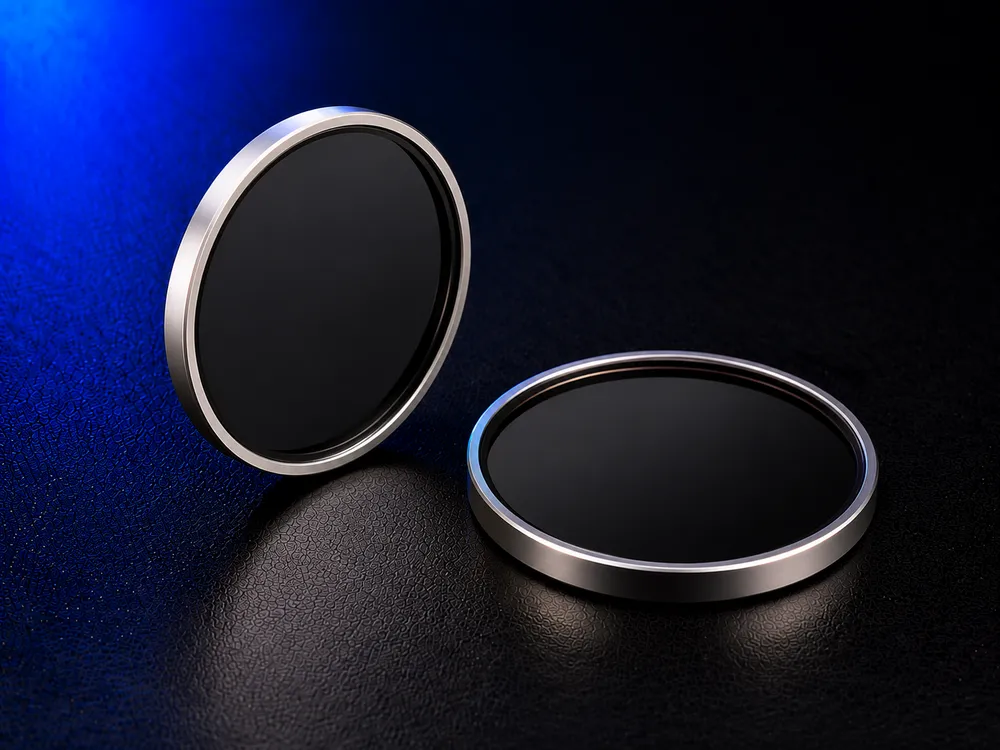
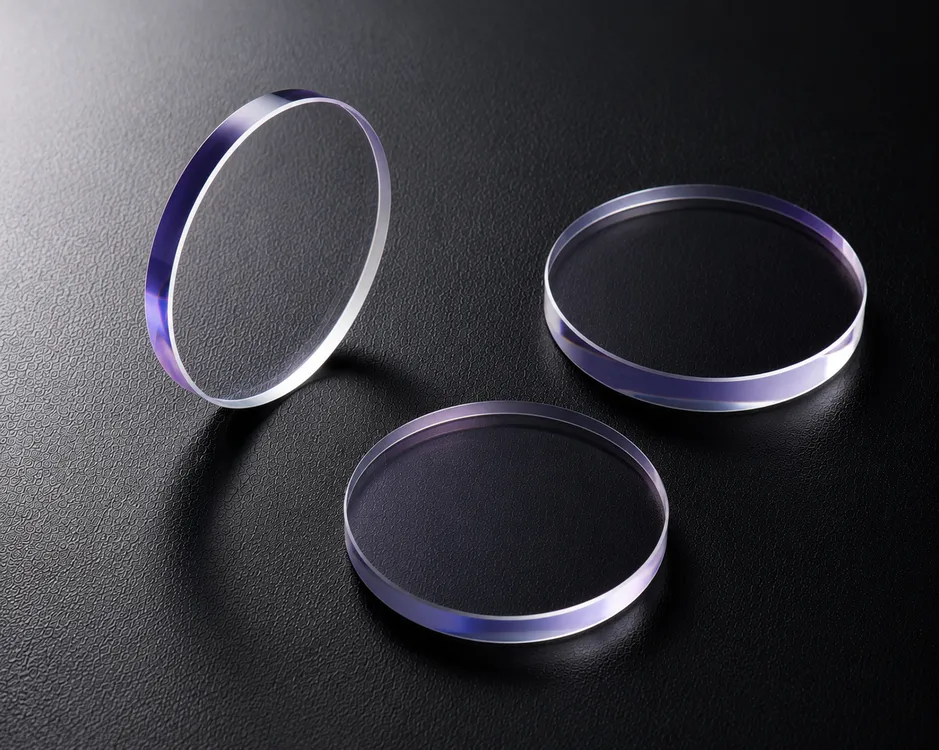
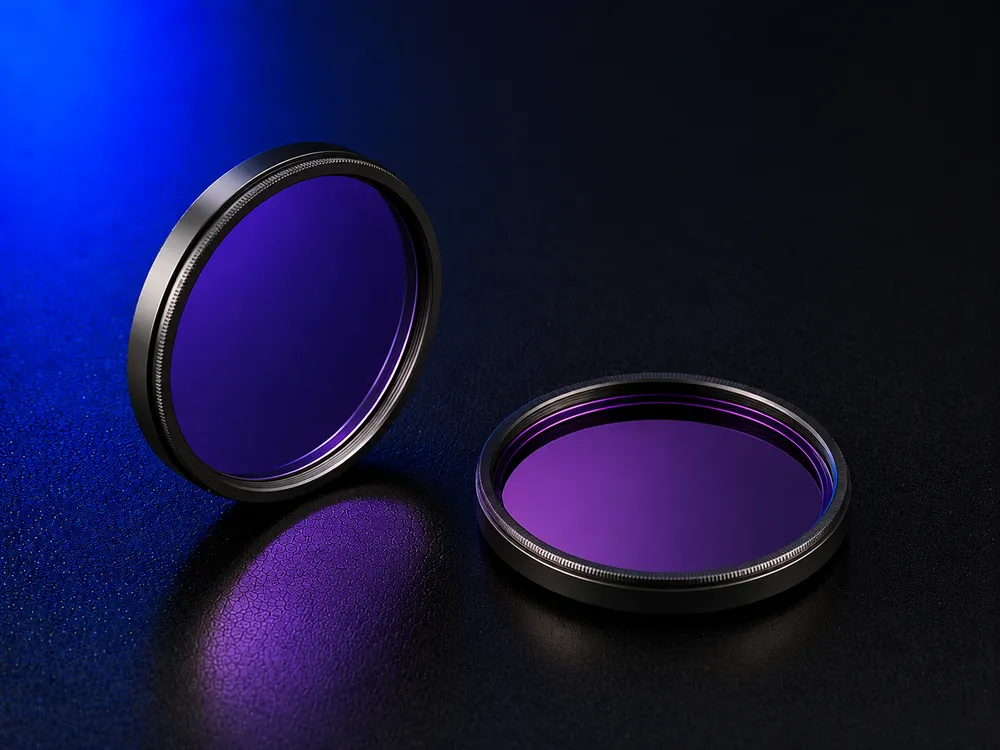
Custom absorptive neutral density filters provide controlled light attenuation with low back-reflection for imaging, sensing and optical instruments. Optical density, wavelength range, dimensions and AR coating can be specified according to the application.
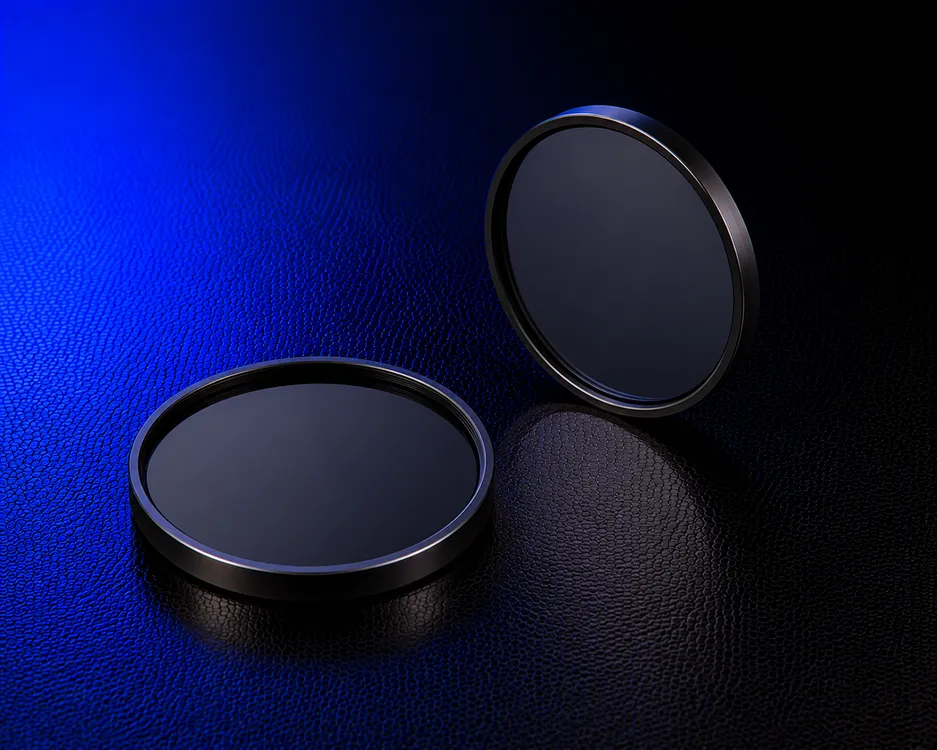
Absorptive Neutral Density Filter Overview
Absorptive Neutral Density Filters reduce optical intensity through absorption within the glass. Their attenuation and spectral neutrality depend on optical density, glass type and wavelength.
They are commonly selected instead of reflective ND filters when reflected light could disturb the optical path. Because attenuation is produced by absorption, part of the incident optical energy is converted into heat. Suitability therefore depends on wavelength, incident power, beam size, power density, mounting and heat dissipation.
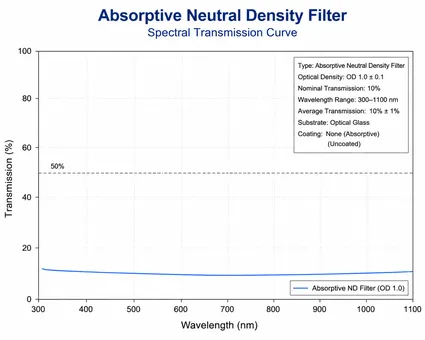
Optical density specifies attenuation and is related to transmission by T = 10−OD. For example, OD 1.0 = 10% transmission and OD 2.0 = 1% transmission. Actual transmission can vary with wavelength and glass type, so the required OD must be evaluated across the operating spectral range. Typical applications include imaging, optical instruments, sensors and low-to-moderate power optical systems.
Chenyu Optics supports custom absorptive ND filter manufacturing according to customer drawings, including custom optical density, dimensions and coating design for prototype and repeat production.
Key Advantages of Absorptive Neutral Density Filter
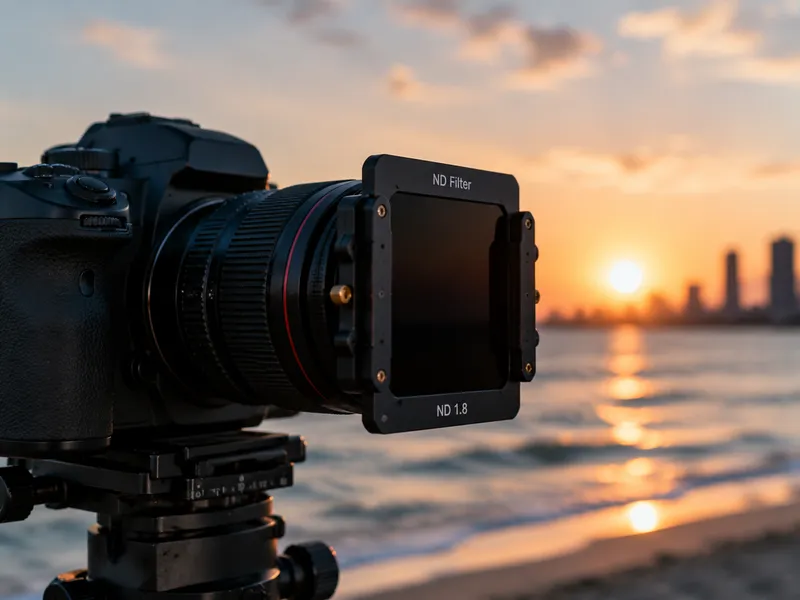
Imaging & Optical Measurement Systems
Absorptive neutral density filters provide controlled attenuation in imaging, sensing and instrumentation applications when incident power and thermal load remain within the selected material capability.
Typical Specifications of Absorptive Neutral Density Filter
| Optical Density Range | Available upon request |
|---|---|
| Common OD Values | Available upon request; must be confirmed for the selected glass and wavelength range |
| Transmission Percentage | Defined by optical density and wavelength; available upon request |
| Absorptive Glass Grade | Available upon request |
| Wavelength Range | Available upon request; depends on glass grade, OD and thickness |
| Spectral Neutrality | Depends on glass type, optical density, thickness and wavelength range |
| Size Range | Available upon request |
| Thickness Range | Available upon request |
| Thickness Tolerance | Available upon request; subject to glass grade, size and drawing review |
| Surface Quality | Available upon request; inspection standard must be specified |
| Surface Flatness | Available upon request; depends on substrate, size, clear aperture and test conditions |
| Parallelism | Available upon request |
| Clear Aperture | Available upon request |
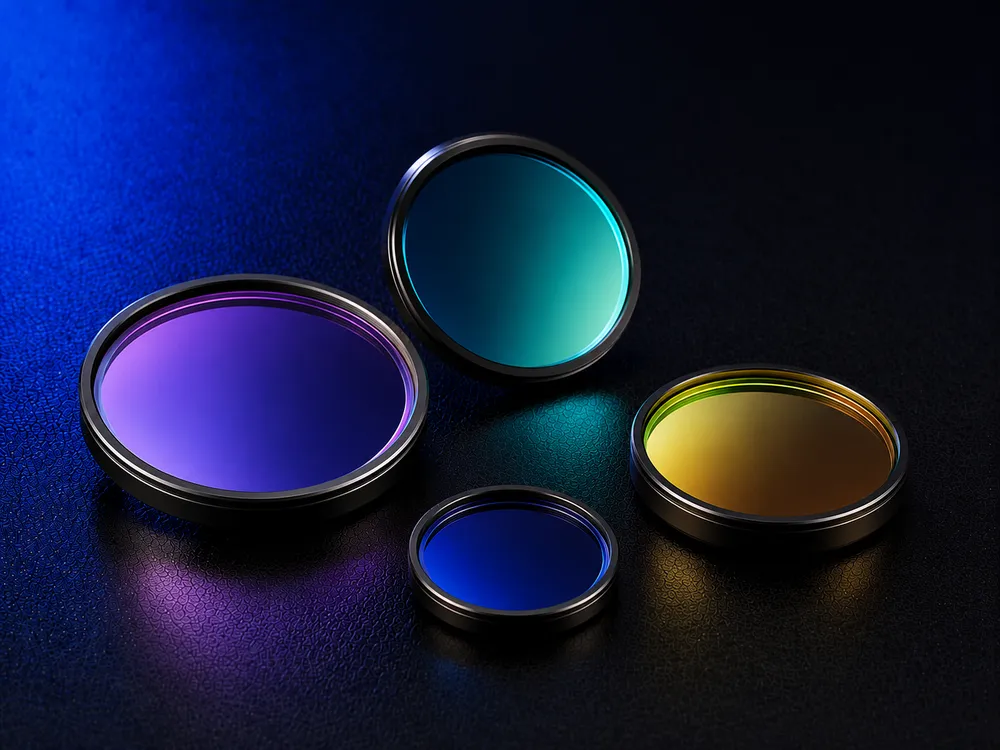
| Coating Options | Uncoated or custom AR coating; available upon request |
| Maximum Recommended Power | Not a universal value; depends on wavelength, beam diameter, power density, exposure time, mounting and thermal conditions |
| Usage Limitations | Absorbed energy generates heat; high-power use requires thermal analysis and application verification |
| Inspection Method | Spectrophotometric, dimensional and optical-surface inspection according to agreed requirements |
Spectral Transmission Curve (Typical)
Why Choose Chenyu Optics for Absorptive Neutral Density Filter
Chenyu Optics supports drawing-based absorptive ND filter production for imaging, sensing and instrumentation systems. We review the required wavelength range, optical density, incident power and mechanical specifications before prototype or repeat production.

Manufacturing Capability for Absorptive Neutral Density Filter
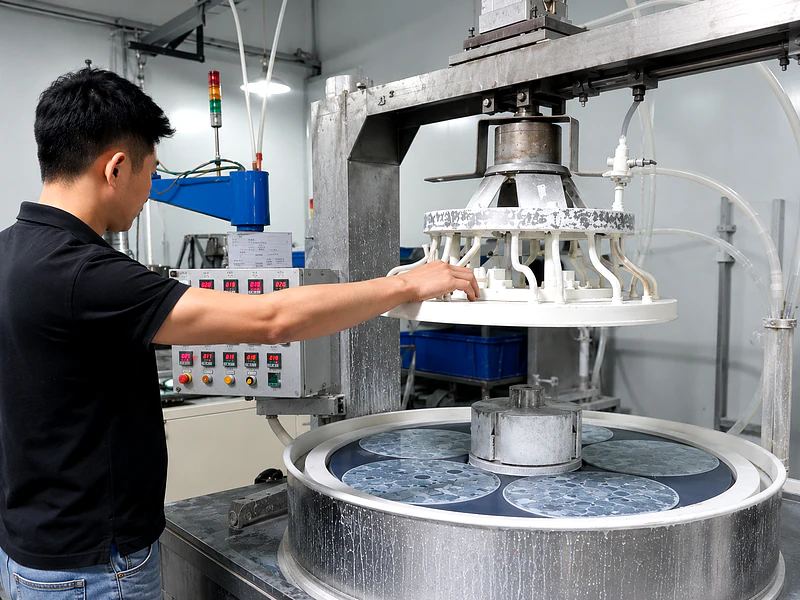
Precision Polishing
Optical surface processing on absorptive glass according to drawing and inspection requirements. See Precision Polishing.
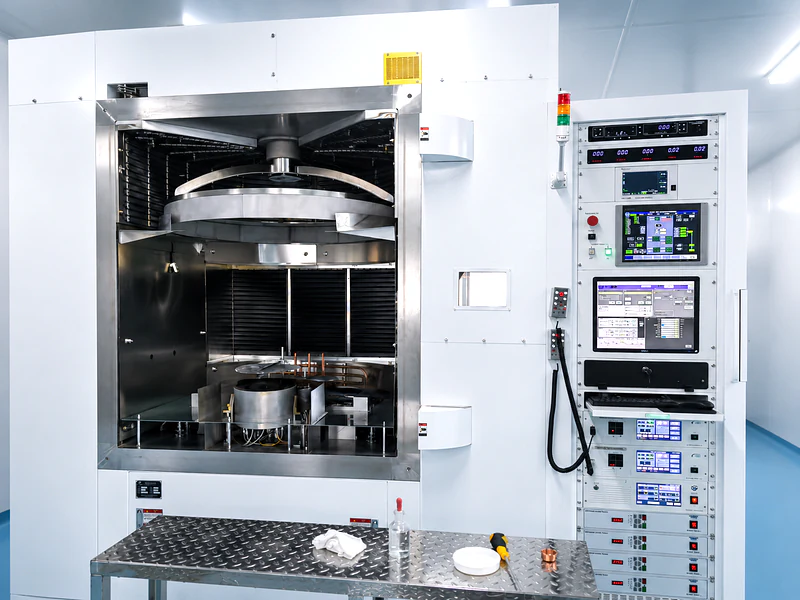
Optical Coating
AR coating options can be reviewed for the specified wavelength range. See Optical Coating.
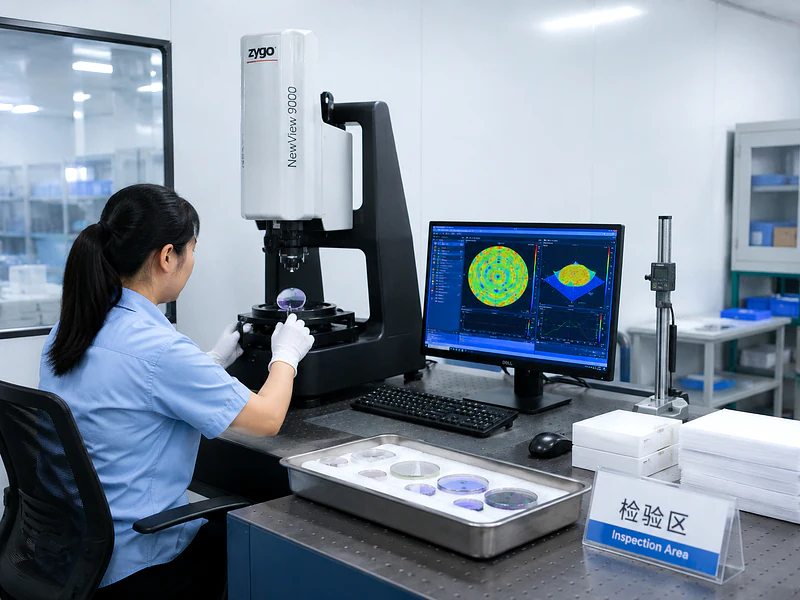
Inspection & Packaging
Optical density, spectral transmission and dimensions are checked according to agreed requirements. See Optical Metrology Inspection.
Custom Absorptive Neutral Density Filter Options
Absorptive vs Reflective Neutral Density Filters
| Property | Absorptive ND Filter | Reflective ND Filter |
|---|---|---|
| Working Principle | Absorptive glass converts part of the incident optical energy into heat | A reflective coating redirects part of the incident optical energy |
| Light Attenuation Method | Primarily absorption within the glass | Primarily reflection from the coated surface |
| Typical Applications | Imaging, instruments, sensors and low-to-moderate power optical systems | Imaging and optical systems where absorbed heat or transmitted wavefront requirements favor a reflective design |
| High Power Suitability | Not assumed; requires power-density and thermal verification | Application-dependent; coating damage threshold and reflected beam management must be evaluated |
| Thermal Considerations | Absorbed energy produces heat in the substrate and mount | Lower bulk absorption may reduce heating, but coating absorption and reflected energy still require consideration |
Important Considerations for Absorptive ND Filters
Applications and Selection Considerations
Imaging Systems
Controls light intensity and exposure while limiting reflected light in the optical path.
Optical Instruments
Provides defined attenuation for calibration, measurement and illumination control.
Sensors
Reduces excessive illumination reaching detectors within the specified spectral range.
Laser Systems
Suitable only when beam power density and thermal load are within the verified capability of the material, coating and mount.
Machine Vision Systems
Controls illumination levels for industrial imaging and inspection.
Scientific Equipment
Supports controlled attenuation in laboratory and measurement setups.
Absorptive Neutral Density Filter FAQ
What is the function of an absorptive neutral density filter?
An absorptive neutral density filter reduces light intensity by absorbing part of the incident optical energy and converting it into heat. Transmission depends on optical density and wavelength.
Why choose absorptive ND over reflective ND filters?
Absorptive ND filters are selected when low reflected energy is important and the incident power and resulting thermal load remain within the material capability. Reflective ND filters attenuate mainly by reflecting part of the incident light.
What optical density values are available?
Available optical density depends on the selected glass and wavelength range. Specify the required transmission or optical density and operating wavelength for review.
Can absorptive ND filters be customized?
Optical density, wavelength range, glass type, dimensions, thickness and coating requirements can be reviewed according to the customer drawing and application.
What information is needed for an absorptive ND filter quotation?
Please provide the required optical density, wavelength range, dimensions, thickness, incident power, beam diameter, angle of incidence, quantity and coating requirements.
Where can I learn more about neutral density filter design?
Additional information on neutral density filter design can be found from Edmund Optics.
Related Products for Absorptive Neutral Density Filter
Need Custom Absorptive Neutral Density Filters?
For a quotation, provide the required OD, wavelength range, dimensions, incident power, beam diameter, coating requirements and quantity. Chenyu Optics will review the optical, thermal and mechanical requirements before proposing a suitable filter specification.