
Narrow Bandpass Filter
Custom narrow bandpass filters are specified by center wavelength (CWL), FWHM bandwidth, peak transmission, blocking range, optical density, angle of incidence, substrate material and coating design. Chenyu Optics reviews these parameters against the customer’s optical system requirements because achievable spectral performance varies with wavelength, filter size, substrate and operating conditions.
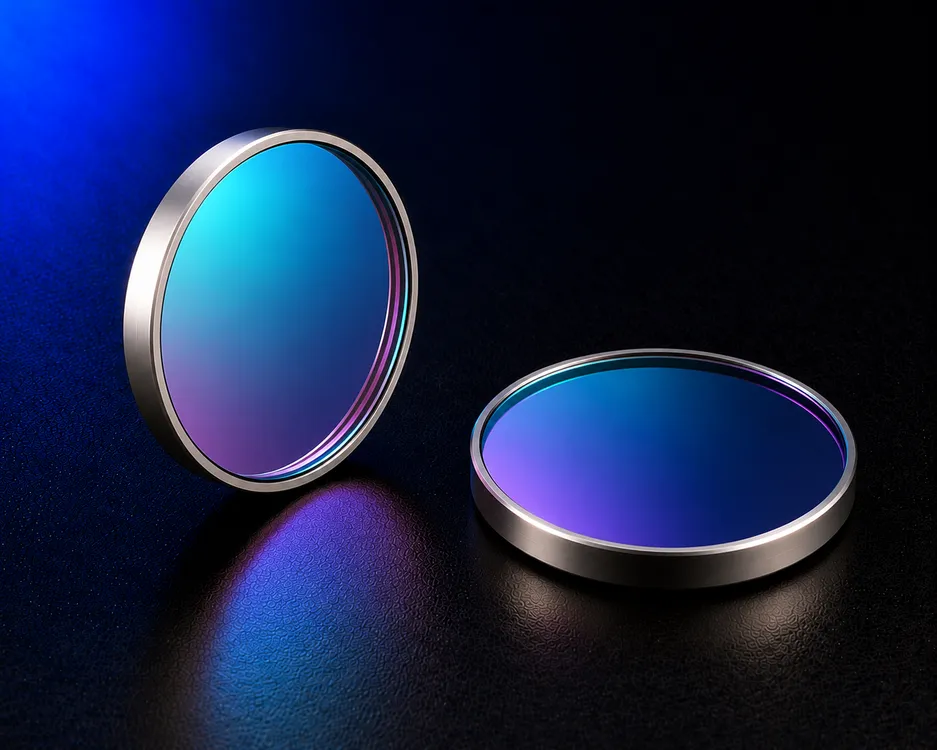
Narrow Bandpass Filter Overview
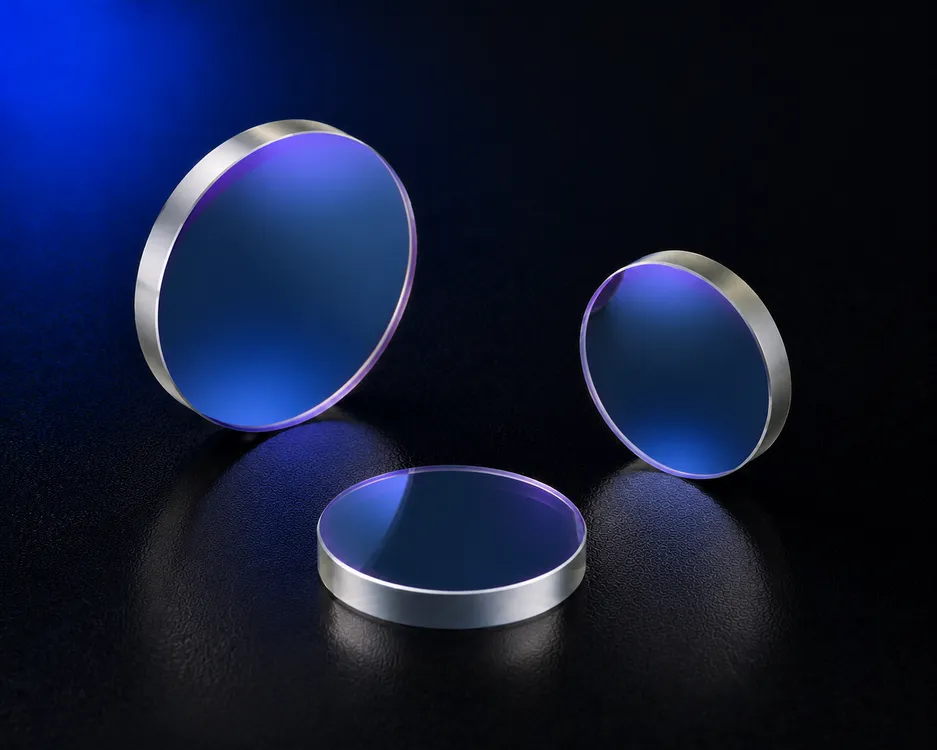
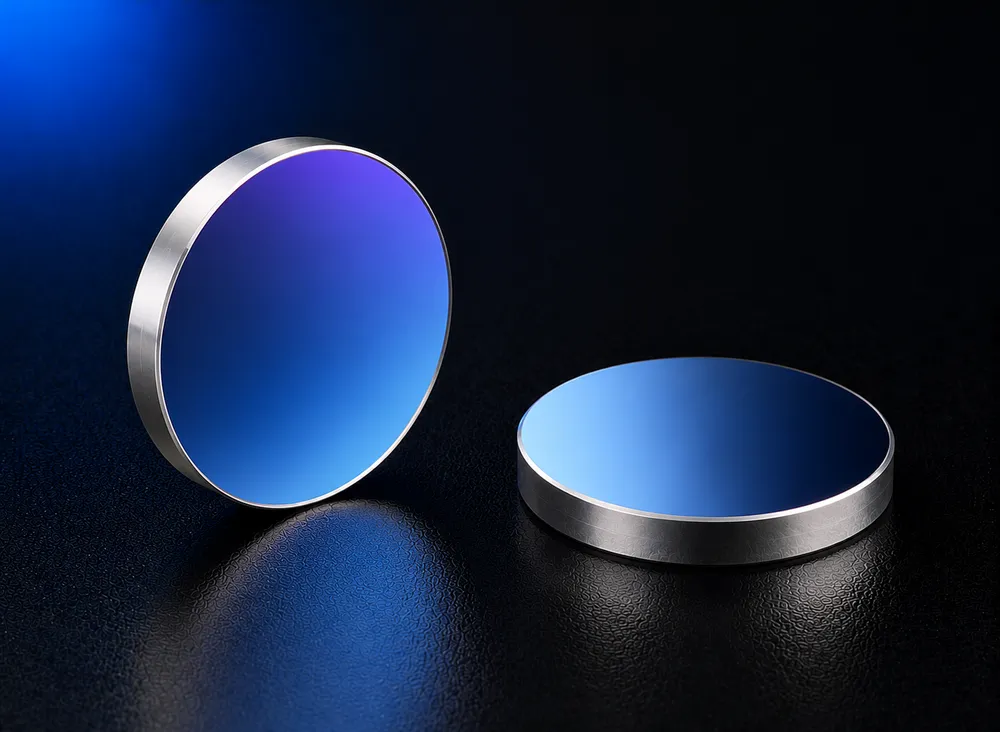
Narrow Bandpass Filters transmit a defined spectral band around the center wavelength while attenuating wavelengths outside the passband.
Filter selection begins with CWL and FWHM, followed by the required peak transmission, blocking range and optical density. Angle of incidence must also be specified because interference filters can exhibit a spectral shift when the incidence angle changes.
Chenyu Optics supports custom filter review according to wavelength, substrate, dimensions, thickness and coating requirements. Final performance is confirmed against the agreed specification and available inspection method.
Key Advantages of Narrow Bandpass Filter
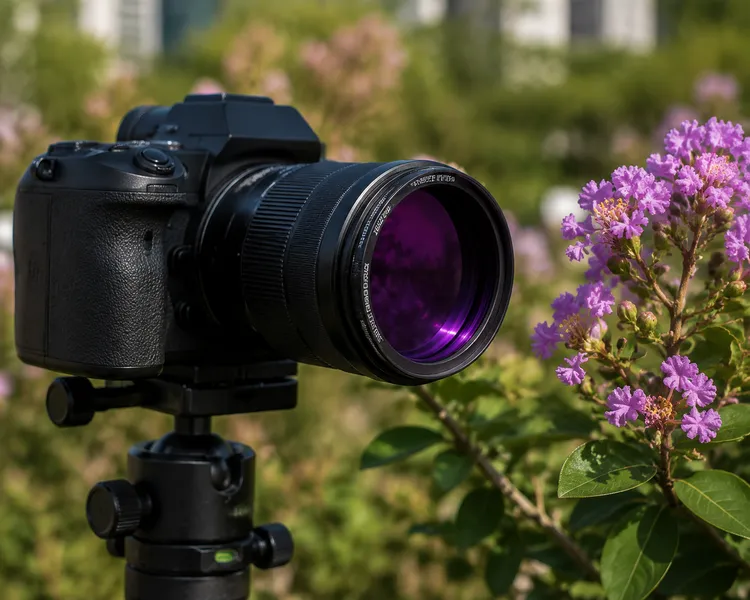
Imaging & Optical Sensing Applications
Narrow bandpass filters are widely used for precise wavelength selection in imaging systems, machine vision, optical sensing equipment and laboratory instrumentation.
Typical Specifications of Narrow Bandpass Filter
| Center Wavelength | Custom specification available upon request |
|---|---|
| FWHM | Custom specification available upon request |
| Peak Transmission | Available upon request |
| Blocking Range | Defined according to the application; available upon request |
| Optical Density | Available upon request |
| Substrate Material | Selected according to wavelength, size and environmental requirements |
| Size Range | Available upon request |
| Thickness Range | Available upon request |
| Surface Quality | According to drawing and inspection requirements |
| Surface Flatness | Available upon request |
| Parallelism | Available upon request |
| Angle of Incidence | Specified by customer optical system |
| Coating Type | Multilayer dielectric bandpass coating; design available upon request |
| Operating Temperature | Custom specification available upon request |
| Inspection Method | Depends on spectral range and agreed performance requirements |
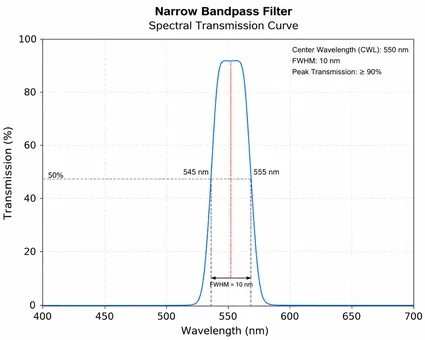
Spectral Transmission Curve (Typical)
Why Choose Chenyu Optics for Narrow Bandpass Filter
Chenyu Optics focuses on drawing-based precision filter manufacturing for laser, fluorescence, spectroscopy and industrial optical systems. We support prototype verification, small-batch production and repeat manufacturing for non-standard narrow bandpass filters.

Manufacturing Capability for Narrow Bandpass Filter
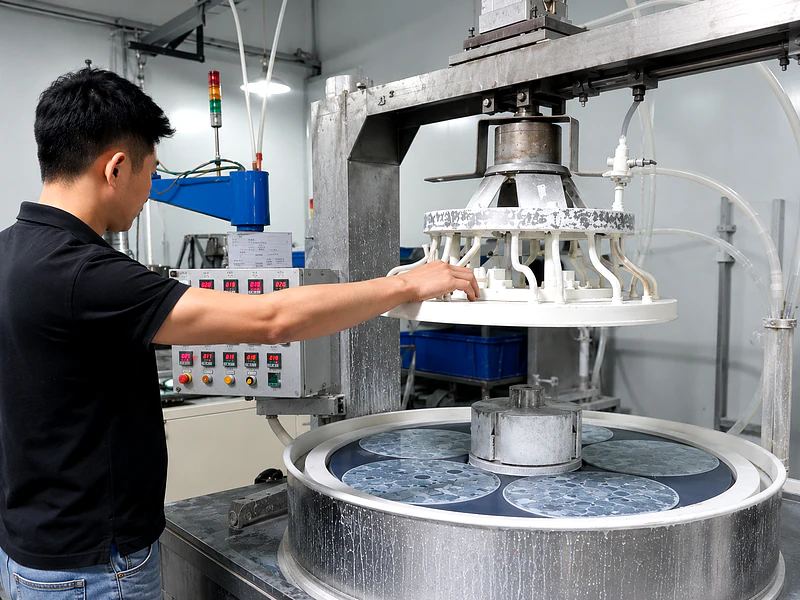
Precision Polishing
Surface and dimensional requirements are processed according to the approved drawing and inspection criteria.
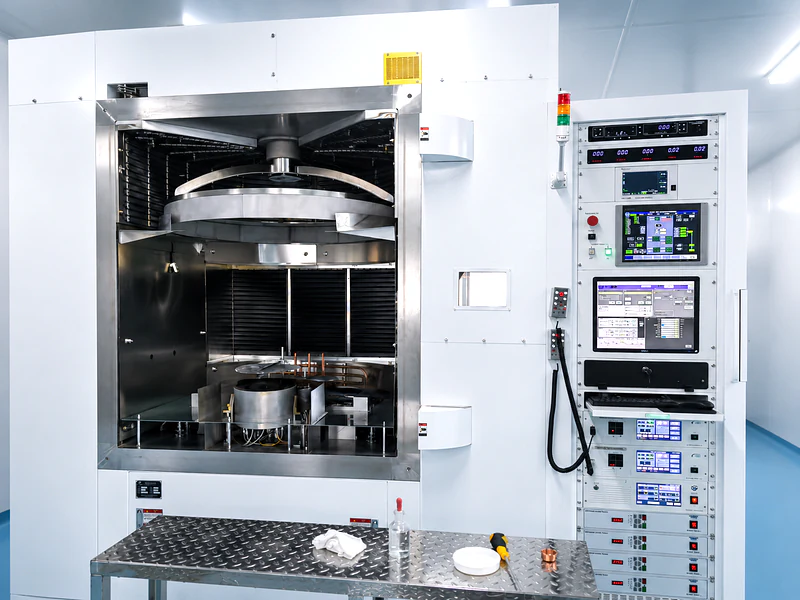
Dielectric Coating
Multilayer coating design is reviewed according to CWL, FWHM, transmission, blocking range and angle of incidence.
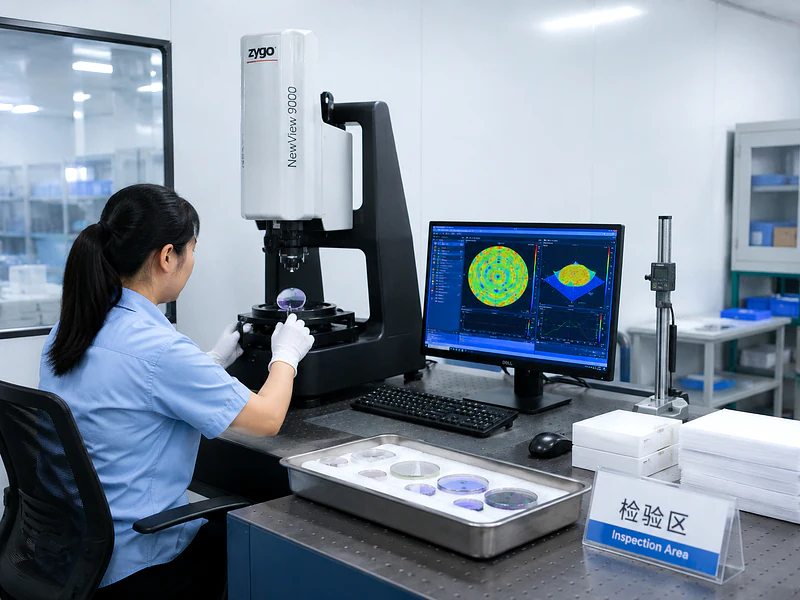
Inspection & Packaging
Spectral and dimensional inspection follows the agreed requirements and available measurement range, followed by protective packaging.
How to Specify a Bandpass Filter
Bandpass Filter Type Comparison
| Filter Type | Typical FWHM | Peak Transmission | Blocking (OD) | Typical Applications |
|---|---|---|---|---|
| Narrow Bandpass Filter | Custom specification available upon request | Depends on wavelength and coating design | Defined by required blocking range | Laser line selection, fluorescence |
| Standard Bandpass Filter | Custom specification available upon request | Depends on wavelength and coating design | Defined by required blocking range | Machine vision, instrumentation |
| Wide Bandpass Filter | Custom specification available upon request | Depends on wavelength and coating design | Defined by required blocking range | Imaging, spectroscopy |
| Custom Bandpass Filter | Defined by customer requirements | Available upon request | Available upon request | Special systems, OEM projects |
Typical Applications
Laser Systems
CWL selects the required laser line, while blocking limits unwanted source wavelengths and background light.
Fluorescence Imaging
Passband placement separates excitation or emission signals from adjacent wavelengths and background.
Spectroscopy
Defined wavelength selection and out-of-band blocking improve spectral isolation at the detector.
Machine Vision
Matched wavelength selection improves contrast while blocking unwanted ambient or illumination bands.
Optical Sensors
Passband and blocking requirements help isolate the target signal and reduce detector interference.
Scientific Instruments
Application-specific wavelength selection supports measurement repeatability and background rejection.
Narrow Bandpass Filter FAQ
What is a narrow bandpass filter used for?
A narrow bandpass filter transmits a specific wavelength range while blocking unwanted spectral components.
What parameters define a narrow bandpass filter?
The main parameters include center wavelength, bandwidth (FWHM), peak transmission, and optical density blocking.
Can the center wavelength be customized?
Center wavelength and bandwidth can be reviewed according to the application, substrate, angle of incidence, filter size and coating design.
Does incident angle affect filter performance?
Yes. The center wavelength may shift with incident angle, so coating design should match the optical system configuration.
What information should I provide for a quotation?
Please provide center wavelength, FWHM, peak transmission, blocking range, optical density, angle of incidence, substrate, size, thickness, quantity and operating environment.
Where can I learn more about bandpass filter design?
Additional information on bandpass filter design can be found from Edmund Optics.
Related Products for Narrow Bandpass Filter
Required Information for Custom Bandpass Filter Quotation
Please provide the center wavelength (CWL), FWHM, peak transmission, blocking range, optical density, angle of incidence (AOI), substrate material, filter size, thickness requirement, quantity and operating environment. These details help determine the appropriate coating design, substrate selection and achievable optical performance.