
Fused Silica Optical Windows
Chenyu Optics manufactures custom fused silica optical windows for laser systems, UV optics, spectroscopy, semiconductor inspection, machine vision and scientific instruments. Material options include JGS series fused silica, Corning 7980, Corning 7979 and HPFS substrates with custom AR and laser line coatings.
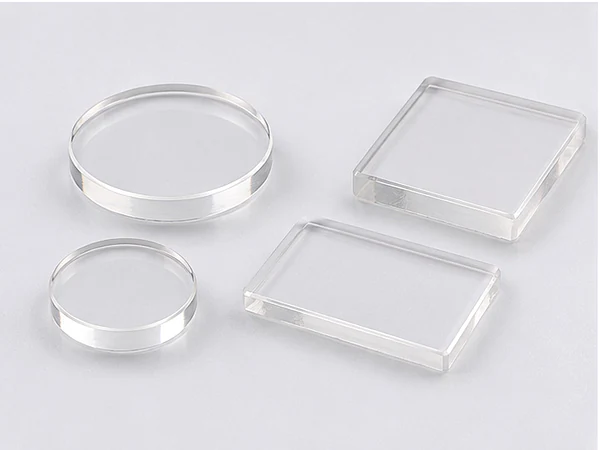
Specification Highlight: Custom round, square and rectangular fused silica windows with specified dimensions, thickness, flatness, parallelism, surface quality and optical coatings.
Please provide your drawing, dimensions, quantity, operating wavelength and coating requirements for a quotation.
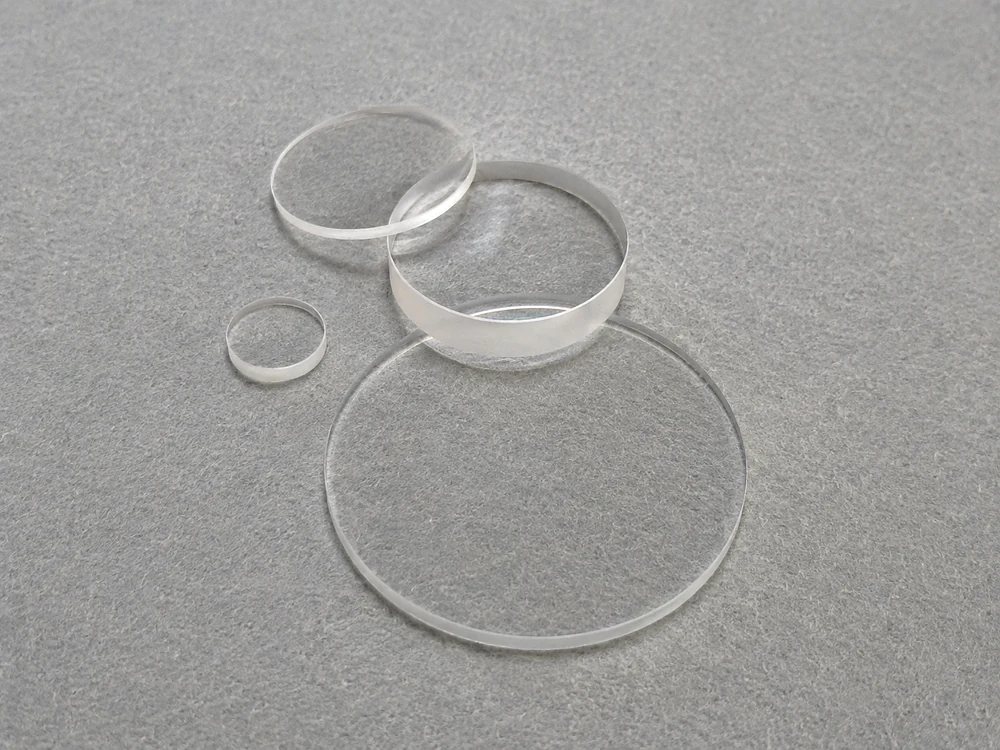
Fused Silica Optical Windows Overview
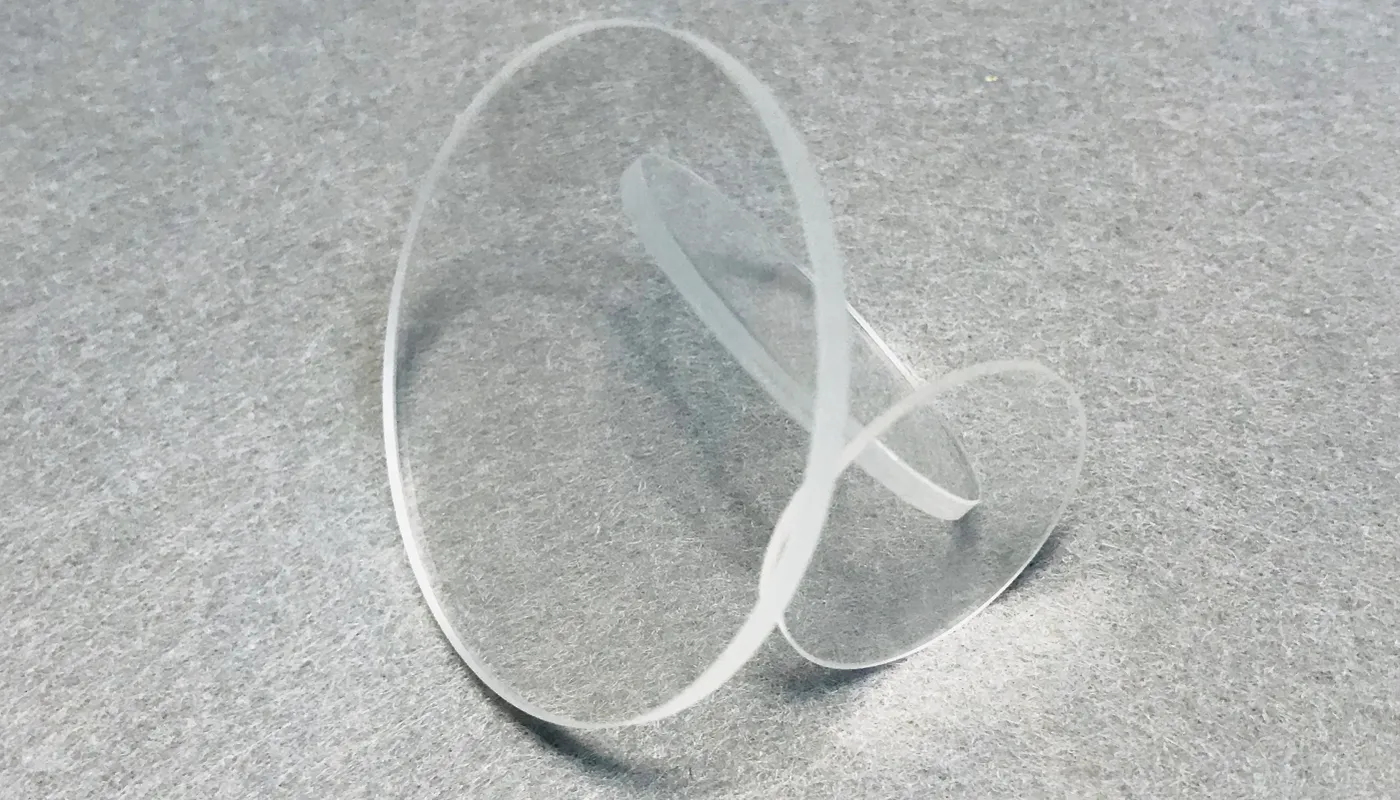
Fused silica optical windows are precision Optical Windows used to protect optical systems while maintaining high transmission from ultraviolet to visible and near-infrared wavelengths. Compared with standard optical glass, fused silica provides lower thermal expansion, improved UV transmission, high optical homogeneity and better resistance to thermal shock.
For UV and laser applications, fused silica is selected when the window must maintain wavefront quality under high optical power, short wavelengths or changing thermal conditions. It is commonly used in excimer laser systems, UV curing equipment, spectroscopy, semiconductor inspection, machine vision and scientific instruments.
Chenyu Optics supplies fused silica optical windows using domestic JGS1, JGS2 and JGS3 materials, as well as imported Corning 7980, Corning 7979 and HPFS substrates. Refer to our Fused Silica Optical Material page for material selection information. Windows can be manufactured as round, square, rectangular or custom-shaped components according to drawing, optical performance and inspection requirements.
Key Advantages of Fused Silica Optical Windows
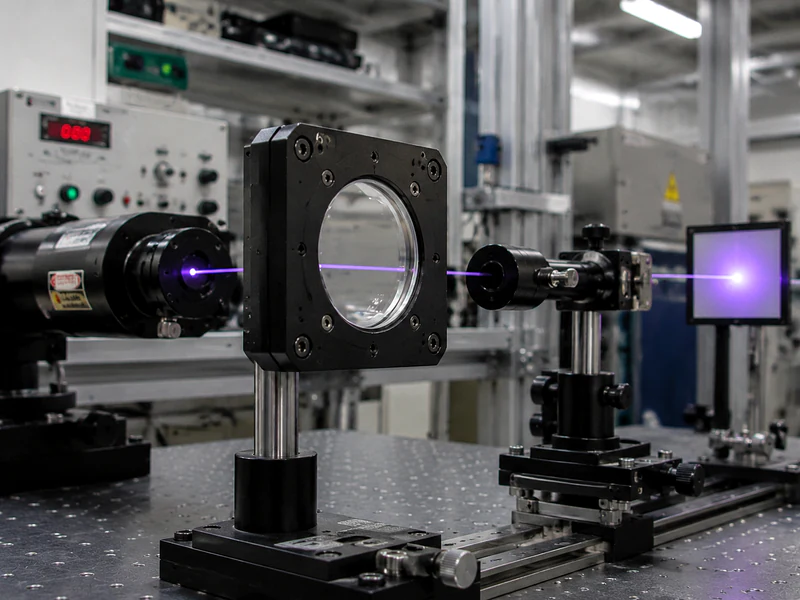
UV, Laser & Precision Optical Use
Fused silica windows are suitable for UV optical systems, laser protection windows, spectroscopy instruments, semiconductor inspection equipment and machine vision modules requiring high optical stability.
Typical Specifications of Fused Silica Optical Windows
| Material | Fused Silica / SiO₂ |
|---|---|
| Material Grades | JGS1, JGS2, JGS3, Corning 7980, Corning 7979 or HPFS; grade confirmed for the operating wavelength and application |
| Typical Transmission Range | Approximately 185 nm–3.5 μm, dependent on material grade, thickness and coating |
| Size Range | Drawing-defined; minimum and maximum manufacturable dimensions confirmed after review of shape, thickness, material grade and tolerances |
| Thickness | Drawing-defined |
| Thickness Tolerance | Drawing-defined; confirmed according to thickness, size and geometry |
| Surface Quality | Drawing-defined scratch-dig requirement; acceptance standard and inspection method to be stated on the drawing |
| Surface Flatness / Figure | Drawing-defined; specify PV or RMS, reference wavelength and the clear aperture over which the requirement applies |
| Flatness Test Condition | Interferometric inspection at the agreed reference wavelength and clear aperture |
| Clear Aperture | ≥85%, ≥90%, ≥95% or drawing-defined |
| Parallelism / Wedge | Drawing-defined; specify parallelism or intentional wedge and the measurement condition |
| Surface Roughness | Drawing-defined for imaging, laser, UV transmission or low-scatter requirements |
| Stress Birefringence | Customer-specified; low-stress material selection available for precision optical systems |
| Coating Band | Customer-specified UV, VIS, NIR, broadband or laser-line wavelength band |
| Coating Performance | Customer-specified transmission or reflection target at the stated wavelength band, AOI and polarization |
| Coating Options | Uncoated, UV AR, VIS AR, NIR AR, BBAR, laser-line AR or custom dielectric coating |
| Inspection Documentation | Dimensional, surface, interferometric or spectral inspection report available when agreed for the project |
Optical Transmission Characteristics of Fused Silica Optical Windows
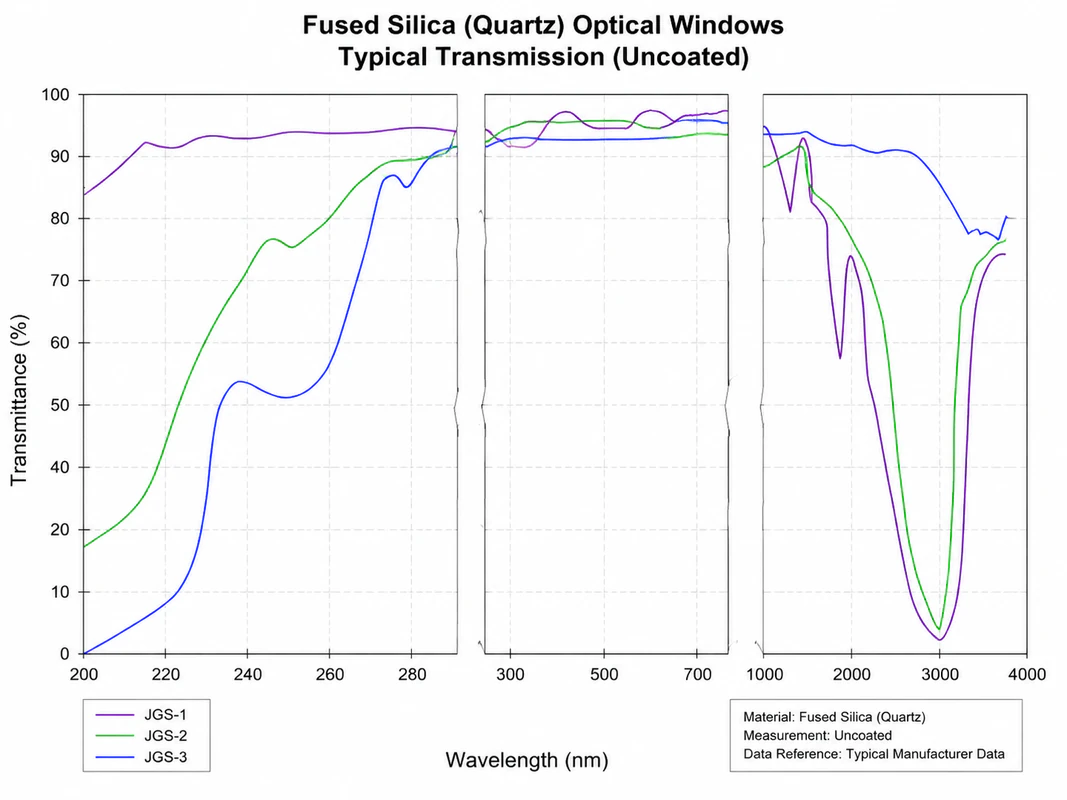
Material Selection Guide for Fused Silica Optical Windows
For projects requiring broader UV-to-mid-infrared transmission, Calcium Fluoride Windows may be considered as an alternative based on the operating environment and mechanical design.
JGS1 UV Grade Fused Silica
JGS1 is synthetic UV-grade fused silica with high purity and good deep-UV transmission. It is commonly selected for UV optics, excimer laser systems, UV curing, medical laser equipment and precision analytical instruments.
JGS2 Visible / UV Grade Fused Silica
JGS2 is a cost-effective optical quartz material for visible and near-UV applications. It is suitable for machine vision covers, industrial inspection windows, general optical viewports and protective windows.
JGS3 Infrared Grade Fused Silica
JGS3 provides improved near-infrared and shortwave infrared transmission due to lower hydroxyl content. It is used for IR viewports, pyrometers, high-temperature chambers and industrial monitoring systems.
Corning 7980 Fused Silica
Corning 7980 is used for demanding UV and excimer laser applications requiring high homogeneity, low inclusions and stable optical performance at 193 nm and 248 nm wavelength regions.
Corning 7979 Fused Silica
Corning 7979 provides high-quality UV-to-visible transmission and stable mechanical properties for precision optical windows, laser systems and instrument-grade optical components.
Corning HPFS Fused Silica
HPFS material is selected for high-purity optical applications requiring controlled stress birefringence, excellent homogeneity and reliable performance in semiconductor and metrology systems.
Why Chenyu Optics for Fused Silica Optical Windows
Chenyu Optics supports drawing-based production of fused silica optical windows for industrial, laser, UV and precision optical applications. We can help customers select suitable JGS or Corning substrates according to wavelength range, transmission target, laser power, mechanical mounting method and budget requirements.
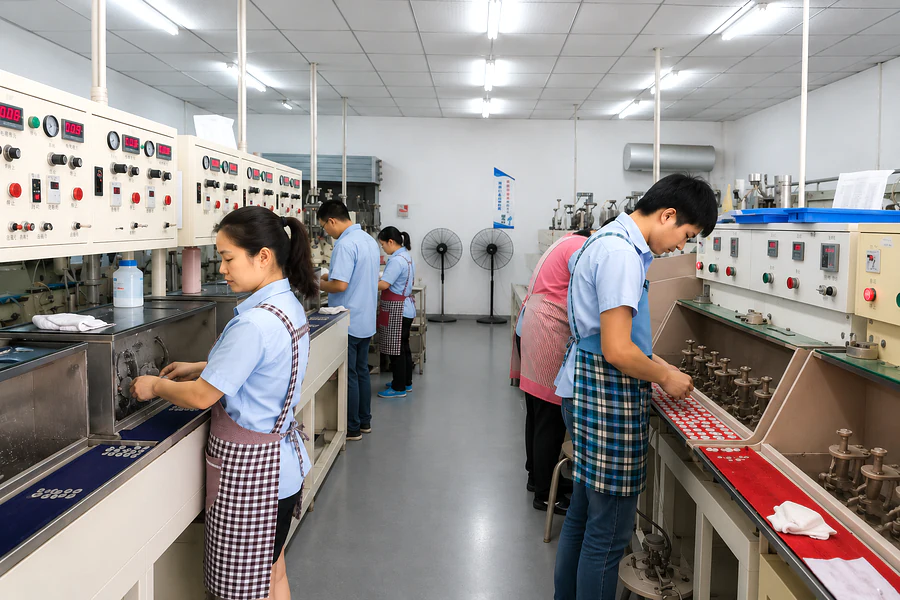
Manufacturing Capability for Fused Silica Optical Windows
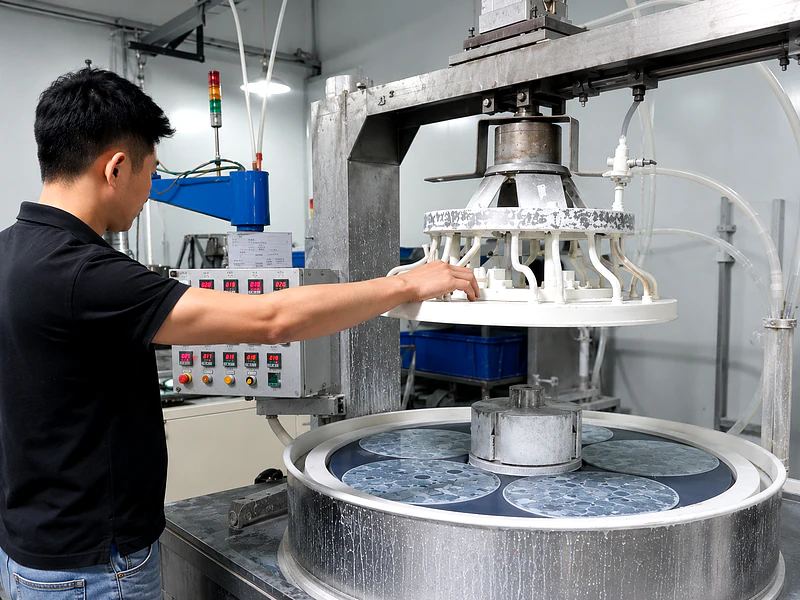
Precision Polishing
Controlled polishing for surface quality, flatness, low scatter and laser-grade optical performance.
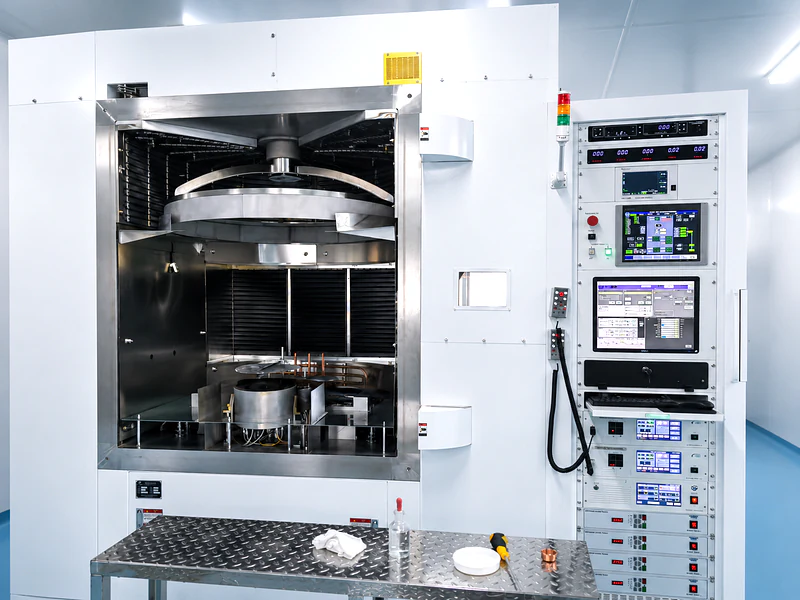
Optical Coating
UV AR, VIS AR, NIR AR, BBAR and laser-line coating support for different optical systems. Review available processes on our Optical Coating page.
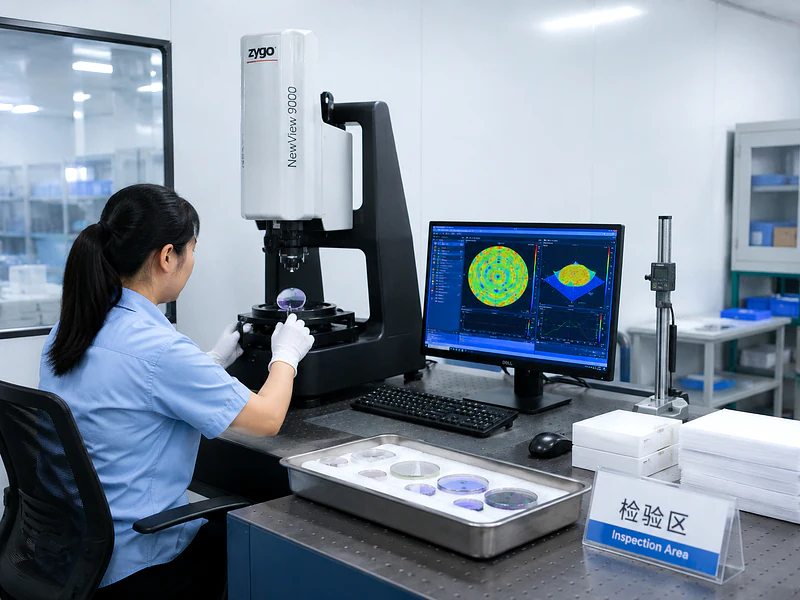
Inspection & Packaging
Dimensional inspection, surface quality review, interferometric testing and spectral verification are selected according to the drawing. See Optical Metrology Inspection for inspection methods and available documentation.
Custom Manufacturing Options for Fused Silica Optical Windows
Dimensions & Geometry
Round, square, rectangular, stepped and special-shaped fused silica windows can be manufactured according to drawings, including custom thickness, edge form and clear aperture requirements. Other drawing-based parts are available through our Custom Optical Components service.
Surface & Mechanical Quality
Surface quality, flatness, parallelism, chamfer and low-wedge requirements can be controlled according to imaging performance, laser power and mounting structure.
Coating & Wavelength Design
Coatings can be designed for UV, visible, NIR, broadband imaging, laser-line transmission or customer-specific spectral requirements. Specify wavelength band, AOI, polarization and required transmission when requesting an Optical Coating.
Fused Silica Optical Windows Material Comparison
| Material | Fused Silica | BK7 | Sapphire Optical Windows | CaF₂ |
|---|---|---|---|---|
| Transmission | UV to NIR / SWIR depending on grade | Visible to near-infrared, limited UV performance | UV to MWIR, high mechanical durability | UV to mid-infrared with low refractive index |
| Thermal Stability | Excellent low thermal expansion | Moderate thermal stability | Excellent thermal and mechanical strength | Good optical performance but more sensitive mechanically |
| Typical Use | UV optics, laser windows, spectroscopy, semiconductor inspection | General visible optics and cost-sensitive windows | Harsh-environment windows, domes and high-pressure viewports | UV, spectroscopy, cryogenic and IR optical systems |
| Selection Note | Preferred when UV transmission, thermal stability and optical homogeneity are required | Preferred for general visible applications with lower cost requirements | Preferred when mechanical hardness is more important than cost | Preferred for broad UV-MIR transmission with careful mechanical design |
Applications of Fused Silica Optical Windows
UV Optical Systems
UV imaging, UV curing, excimer laser optics and short-wavelength analytical systems.
Laser Systems
Laser protection windows, debris shields and AR-coated laser line windows.
Spectroscopy
UV-Vis-NIR spectrometers, sample cell windows and analytical optical paths.
Semiconductor Equipment
Wafer inspection, metrology optics, plasma chamber windows and lithography-related systems.
Machine Vision
Protective optical windows for industrial cameras, inspection modules and automation systems.
Scientific Instruments
Precision optical windows for laboratory instruments, metrology equipment and optical benches.
Fused Silica Optical Windows FAQ
What is the difference between JGS1, JGS2 and JGS3 fused silica?
JGS1 is typically selected for deep-UV transmission and UV laser systems. JGS2 is used for visible and near-UV optical windows with good cost efficiency. JGS3 has lower hydroxyl content and is selected for near-infrared and shortwave infrared applications.
When should I choose Corning 7980 instead of JGS1?
Corning 7980 is recommended when the system requires higher material homogeneity, low inclusion level, controlled stress birefringence or demanding excimer laser performance. JGS1 is suitable for many industrial UV and laser applications where imported material is not required.
Can fused silica optical windows be used for high-power lasers?
Yes. Fused silica has low thermal expansion and good laser damage resistance when processed with suitable surface quality, cleaning and coating control. The required grade, coating and surface specification should be selected according to wavelength, pulse width and laser power.
Can you provide AR coatings for UV and laser wavelengths?
Yes. Chenyu Optics can provide UV AR, visible AR, NIR AR, BBAR and laser line coatings for wavelengths such as 266 nm, 355 nm, 532 nm and 1064 nm, depending on the application and performance requirements.
Can you manufacture prototype quantities of fused silica windows?
Yes. Prototype quantities, small batches and repeat production can be supported. Please provide material grade, size, thickness, surface quality, flatness, coating requirement, quantity and drawing if available.
Can you provide material certification or transmission reports?
Material certificates, inspection reports or transmission test data can be provided when required by the project. Availability depends on the material grade, order quantity and testing requirements.
Where can I learn more about fused silica optical materials?
Additional fused silica material information can be found from Edmund Optics.
Related Products for Fused Silica Optical Windows
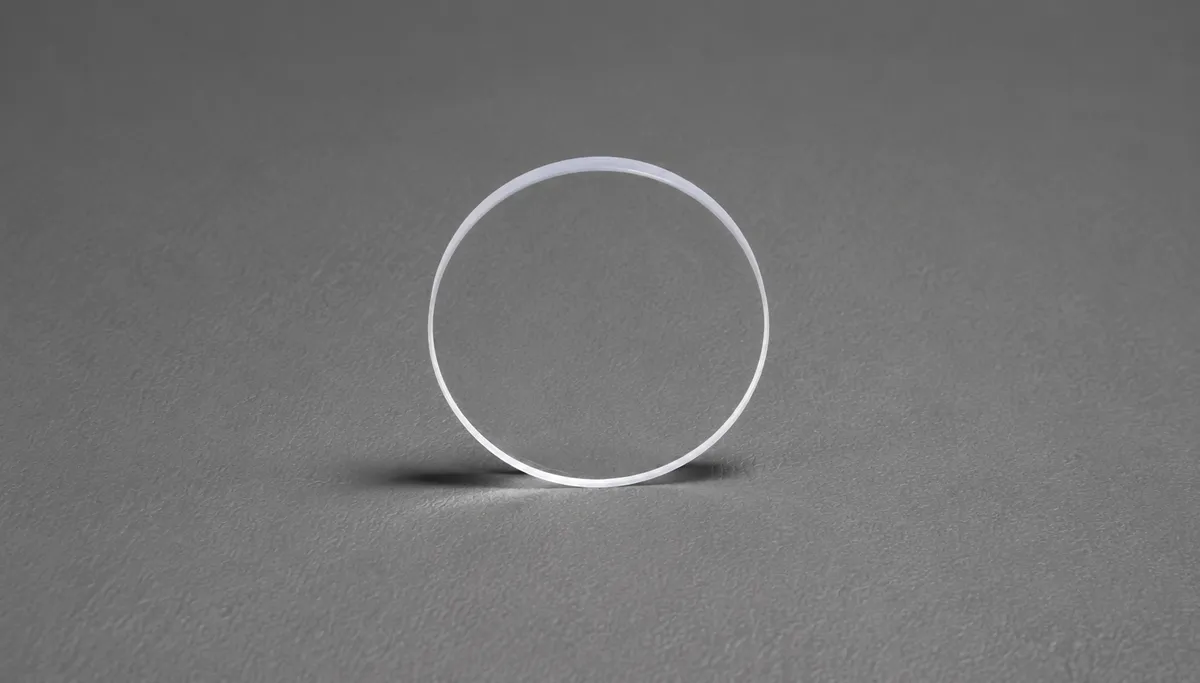
Request A Quote For Custom Fused Silica Windows
To provide an accurate quotation, please provide the following information:
- Size and thickness
- Material grade
- Wavelength range
- Surface quality
- Flatness and parallelism
- Coating requirements
- Quantity
- Drawing or technical specification