
Dispersion Prism
Dispersion Prisms are precision optical components designed to separate incident light into its constituent wavelengths through refraction. By taking advantage of the wavelength-dependent refractive index of optical glass, dispersion prisms provide accurate spectral separation for scientific and industrial applications. Chenyu Optics manufactures dispersion prisms in N-BK7, fused silica and flint glass, uncoated or with custom AR coatings, for spectroscopy, spectrometers and optical instrumentation.
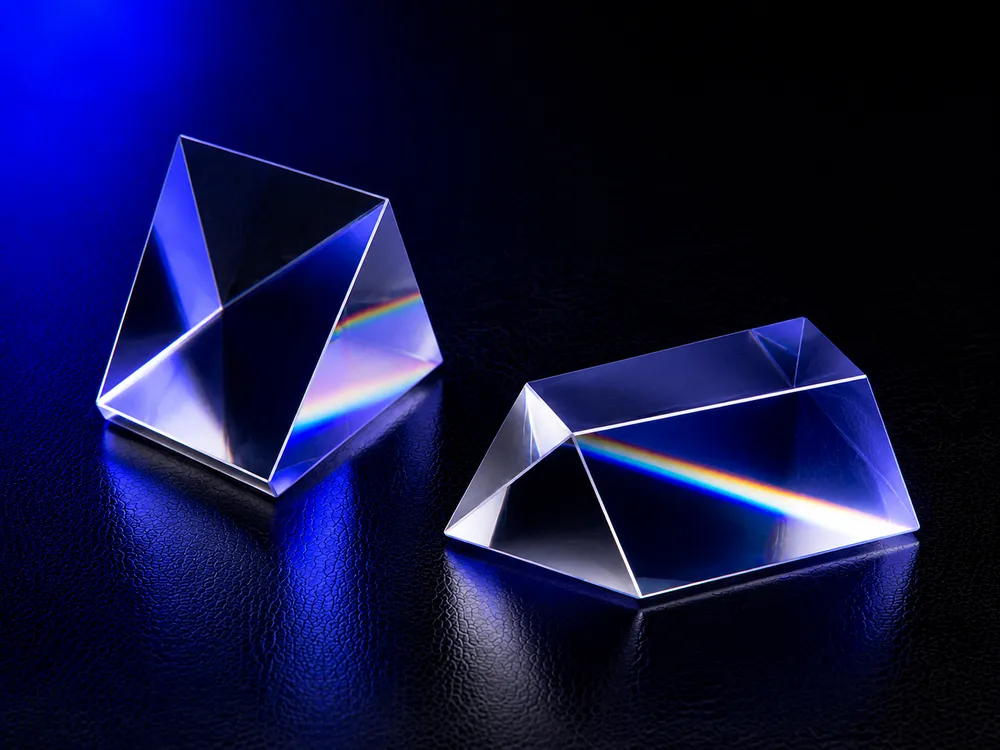
Dispersion Prism Overview
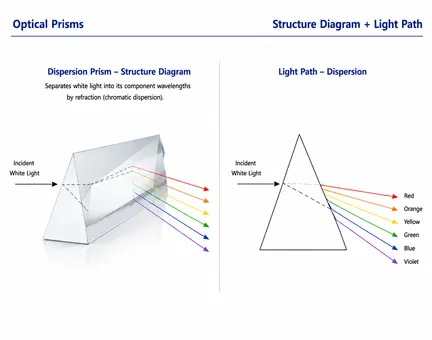
Dispersion Prisms are precision optical components designed to separate incident light into its constituent wavelengths through refraction.
By taking advantage of the wavelength-dependent refractive index of optical glass, dispersion prisms provide accurate spectral separation for scientific and industrial applications. They are widely used in spectroscopy systems, spectrometers, monochromators, wavelength division equipment and optical research instruments.
Chenyu Optics supports custom dispersion prism manufacturing according to customer drawings, including apex angle, dimensions, material and coating design. Explore the Optical Prisms category and related Equilateral Prism, Direct Vision Prism, Pellin-Broca Prism and Custom Optical Prism pages. Material selection guidance is available from Optical Materials.
Key Advantages of Dispersion Prism
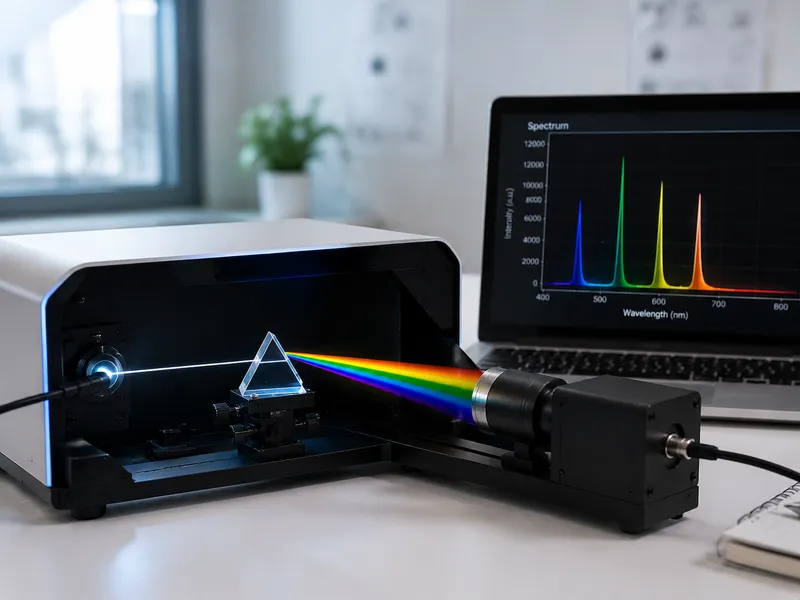
Spectroscopy & Spectrometer Systems
Dispersion prisms are widely used for spectral separation in spectroscopy systems, spectrometers, monochromators and optical research instruments.
Typical Specifications of Dispersion Prism
| Material Options | N-BK7, UV-grade fused silica, flint glass such as N-SF11, or another optical glass selected for the required dispersion |
|---|---|
| Refractive Index | N-BK7: nd ≈ 1.5168; fused silica: nd ≈ 1.4585; N-SF11: nd ≈ 1.7847. Use the selected material melt data and operating wavelength for final optical design. |
| Abbe Number | N-BK7: Vd ≈ 64.17; fused silica: Vd ≈ 67.8; N-SF11: Vd ≈ 25.68. Lower Abbe number generally indicates stronger visible dispersion. |
| Apex Angle | Custom according to required angular dispersion; 60° is common for an equilateral dispersing prism |
| Angle Tolerance | Typically ±1 arc minute; tighter drawing-defined tolerances are subject to prism size, material and inspection review |
| Surface Quality | Typically 40-20 or 20-10 scratch-dig; tighter requirements available subject to application and manufacturability review |
| Surface Flatness | Typically λ/4 to λ/10 at 632.8 nm over the specified clear aperture, depending on face size and material |
| Dimensional Tolerance | Drawing-defined for length, width, height and thickness; final capability depends on geometry, material and quantity |
| Clear Aperture | Drawing-defined; specify the usable polished aperture and edge exclusion for each optical face |
| Coating Options | Uncoated, single-band AR, broadband AR, laser-line AR or custom wavelength coating on designated faces |
| Wavelength Range | N-BK7 typically visible to NIR; UV fused silica approximately 180–2500 nm; flint-glass range depends on selected grade and thickness |
| Custom Dimensions | Custom apex angle, face dimensions, height, base length, bevels, coated faces and mounting datums according to customer drawing |
Prism Structure & Light Path Diagram
Why Choose Chenyu Optics for Dispersion Prism
Chenyu Optics focuses on drawing-based precision prism manufacturing for spectroscopy, research and optical instrumentation systems. We support prototype verification, small-batch production and repeat manufacturing for non-standard dispersion prisms.

Manufacturing Capability for Dispersion Prism
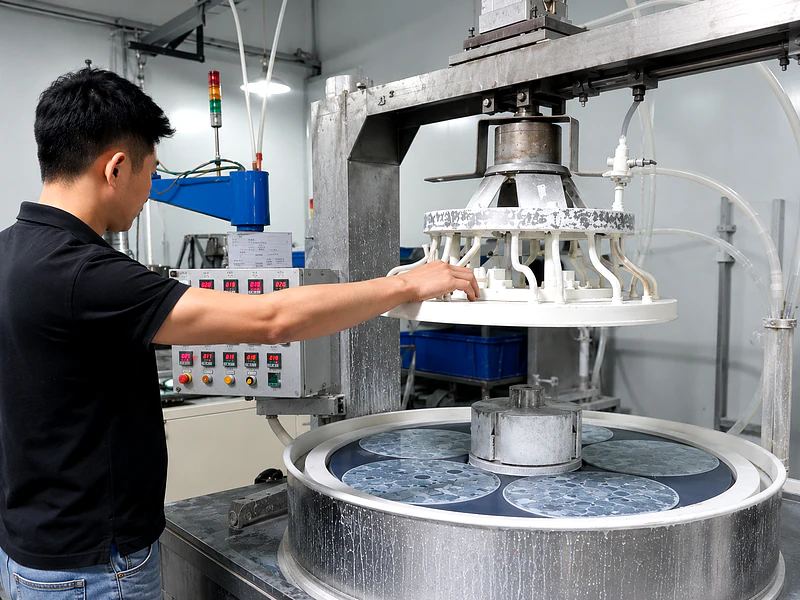
Precision Grinding & Polishing
Precise angular control and surface polishing to achieve accurate apex angles and stable dispersion performance.
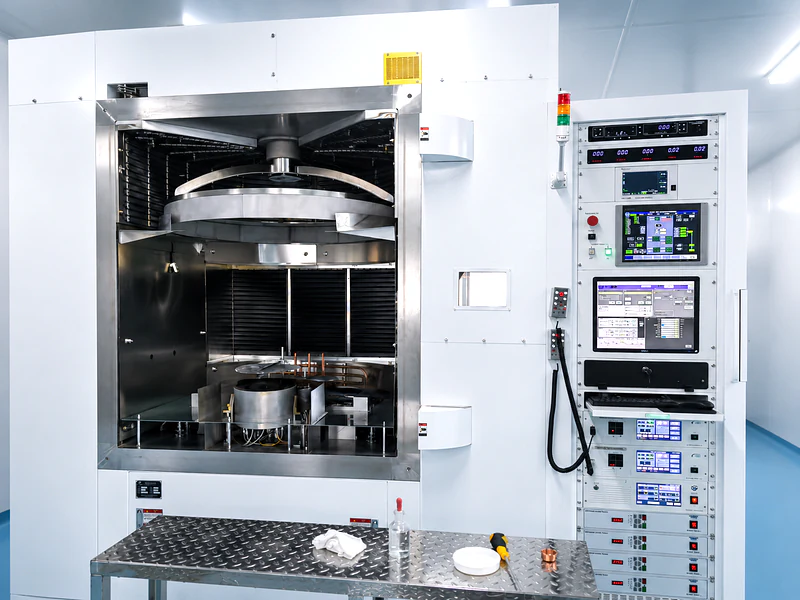
Optical Coating
Custom AR coating options for spectroscopy, instrumentation and research applications.
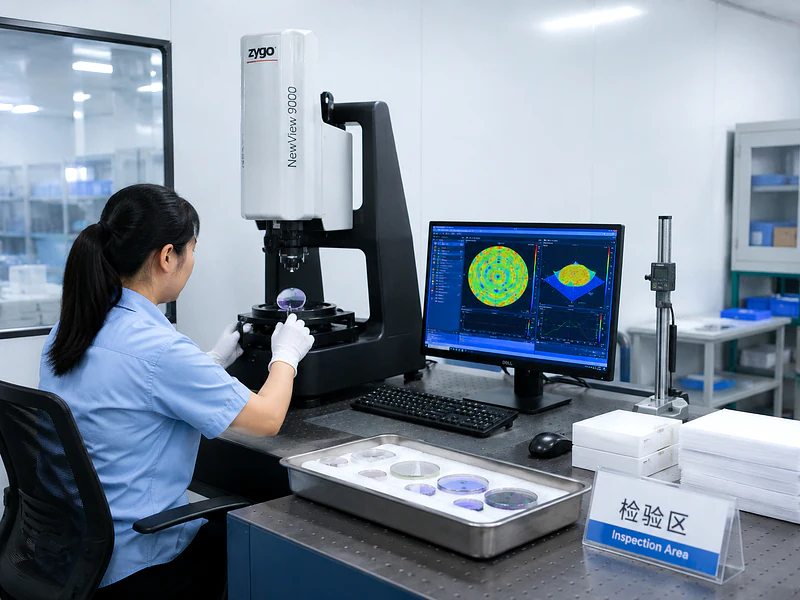
Inspection & Packaging
Angular inspection, surface review, optical performance checking and protective packaging before shipment.
Custom Manufacturing Options for Dispersion Prism
Dimensions & Apex Angle
Custom dimensions and apex angle can be manufactured according to customer drawings and dispersion requirements.
Material & Optical Quality
Material selection, angular tolerance, surface accuracy and surface quality can be optimized according to system requirements.
Coating & Wavelength Design
Uncoated or custom AR coatings can be specified for spectroscopy, instrumentation or research applications.
Prism Type Comparison
| Dispersion Prism | Right Angle Prism | Equilateral Prism | Wedge Prism | |
|---|---|---|---|---|
| Primary Function | Wavelength dispersion / spectral separation | 90° beam deviation or reflection | Wavelength dispersion or beam deviation | Small-angle beam deviation |
| Typical Geometry | Triangular, custom apex angle | Right-angle triangular cross-section | Equilateral triangular cross-section (60°) | Thin wedge, small angle between surfaces |
| Typical Function Focus | Maximizing wavelength separation | Beam folding, image inversion | Balanced dispersion for spectroscopy | Fine beam steering or alignment |
| Typical Applications | Spectroscopy, spectrometers, monochromators | Beam folding, periscopes, imaging systems | Spectroscopy, classic dispersion demonstrations | Beam steering, interferometry, alignment |
Applications of Dispersion Prism
Spectroscopy
Disperses broadband light into wavelength components for spectral analysis, spectrometers and monochromators.
Wavelength Separation
Separates spectral bands through material dispersion for analysis, selection and beam routing.
Scientific Instruments
Provides controlled dispersion in laboratory, analytical and research instrumentation.
Laser Systems
Supports wavelength selection, tuning and spectral separation in suitable laser optical layouts.
Educational Optics
Demonstrates refraction, dispersion and visible-spectrum separation in teaching equipment.
Optical Measurement Systems
Enables wavelength-dependent beam deviation in metrology and optical analysis systems.
Dispersion Prism FAQ
What is the function of a dispersion prism?
A dispersion prism separates incident light into its constituent wavelengths by taking advantage of the wavelength-dependent refractive index of the prism material.
What materials are commonly used for dispersion prisms?
Common materials include N-BK7, fused silica, and flint glass, selected according to the required dispersion and wavelength range.
How does apex angle affect dispersion performance?
A larger apex angle generally increases the angular separation between wavelengths, but also increases optical path length and potential losses.
Can dispersion prisms be customized?
Yes. Chenyu Optics provides customized apex angles, dimensions, materials, and AR coating options.
What information should I provide for a quotation?
Please provide apex angle, dimensions, material, angular tolerance, surface quality, coating requirement, quantity and drawing if available.
Where can I learn more about prism design?
Additional information on prism design can be found from Edmund Optics.
Related Products for Dispersion Prism
Need Custom Dispersion Prisms?
Send us your drawing, apex angle, dimensions, material and coating requirements. Chenyu Optics will review the optical and mechanical specifications and provide a suitable dispersion prism manufacturing suggestion.