
Germanium Aspheric Lens
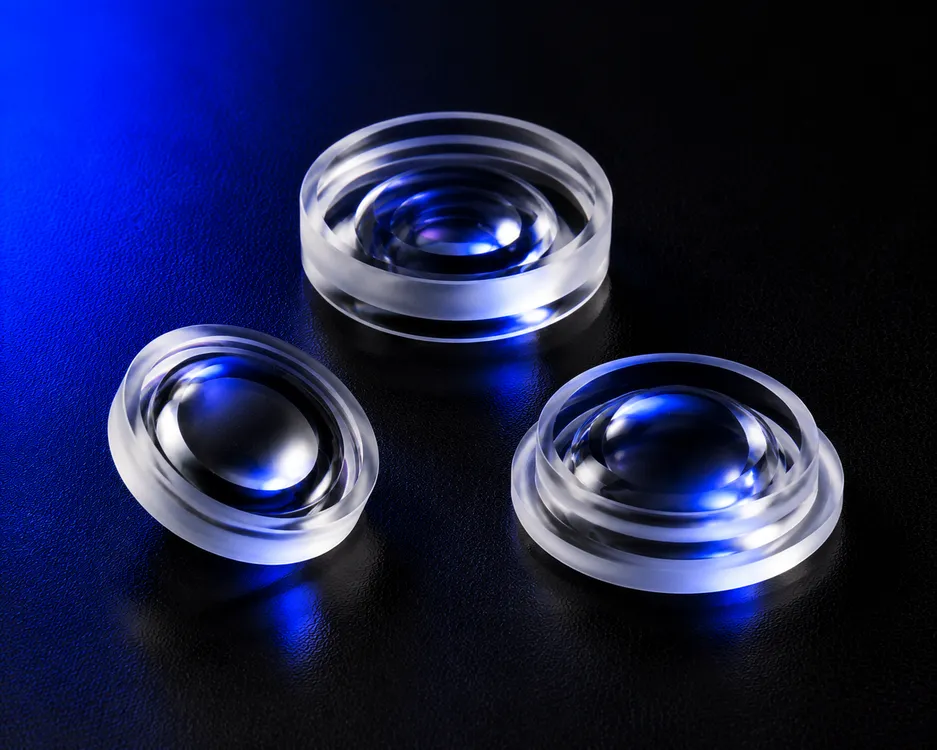
Germanium Aspheric Lenses are precision infrared optical components manufactured from high-purity germanium (Ge) substrates. With excellent infrared transmission from approximately 2–14 μm and a high refractive index, these lenses provide efficient focusing and improved imaging performance for infrared optical systems. Chenyu Optics manufactures germanium aspheric lenses uncoated or with MWIR AR, LWIR AR and custom infrared AR coatings for thermal imaging, IR cameras and laser applications.
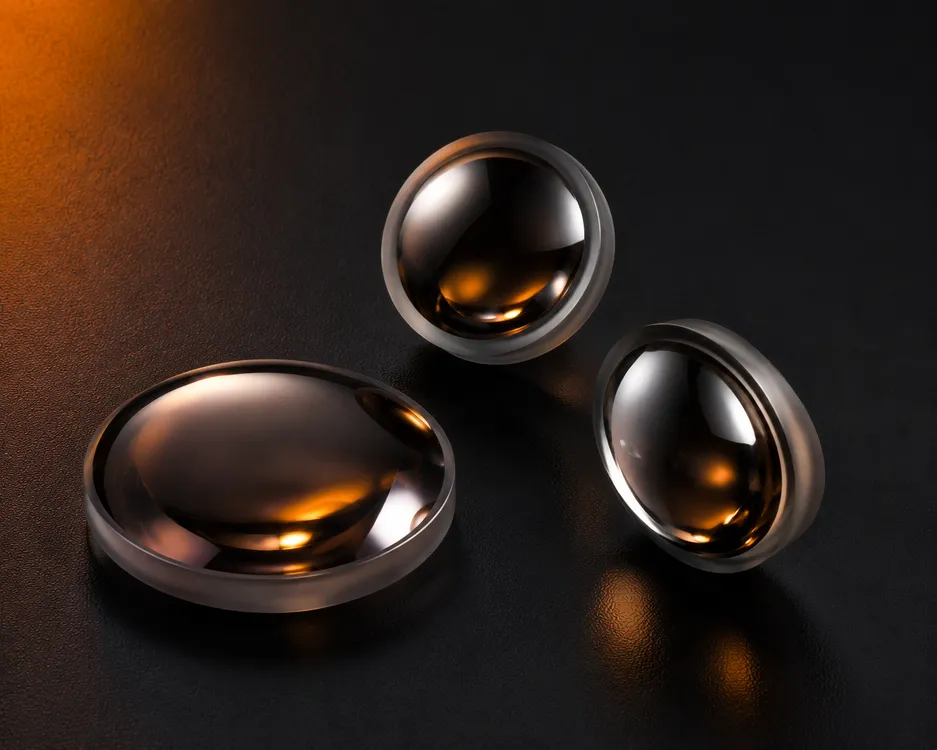
Germanium Aspheric Lens Overview
Germanium Aspheric Lenses are precision infrared optical components manufactured from high-purity germanium (Ge) substrates. With excellent infrared transmission from approximately 2–14 μm and a high refractive index, these lenses provide efficient focusing and improved imaging performance for infrared optical systems.
The aspheric surface design reduces spherical aberration and enables compact optical configurations with improved resolution and optical efficiency. Germanium aspheric lenses are widely used in thermal imaging systems, infrared cameras, night vision systems, IR sensors and laser applications.
Chenyu Optics supports custom germanium aspheric lens manufacturing according to customer drawings, including custom diameter, focal length, aspheric profile and coating design for prototype and repeat production.
Key Advantages of Germanium Aspheric Lens
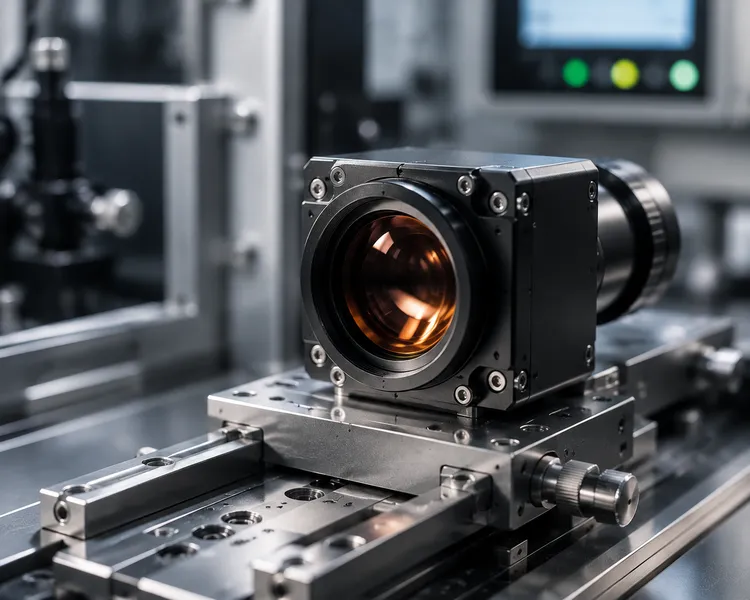
Thermal Imaging & IR Camera Systems
Germanium aspheric lenses are widely used for compact, aberration-corrected infrared focusing in thermal imaging systems, IR cameras, night vision systems and laser applications.
Typical Specifications of Germanium Aspheric Lens
| Material | Germanium (Ge) |
|---|---|
| Optical Function | Infrared imaging / Focusing / Aberration correction |
| Transmission Range | Approx. 2 – 14 μm |
| Refractive Index | High, approx. 4.0 @ 10.6 μm |
| Surface Type | Precision aspheric profile |
| Wavelength Range | MWIR / LWIR |
| Diameter | Customized |
| Focal Length | Customized |
| Surface Accuracy | λ/4 – λ/10 @ 633 nm |
| Surface Quality | 20-10 / 40-20 scratch-dig |
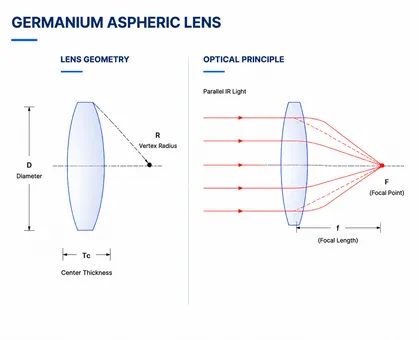
Lens Geometry & Optical Principle
Why Choose Chenyu Optics for Germanium Aspheric Lens
Chenyu Optics focuses on drawing-based precision lens manufacturing for thermal imaging, infrared sensing and laser optical systems. We support prototype verification, small-batch production and repeat manufacturing for non-standard germanium aspheric lenses.
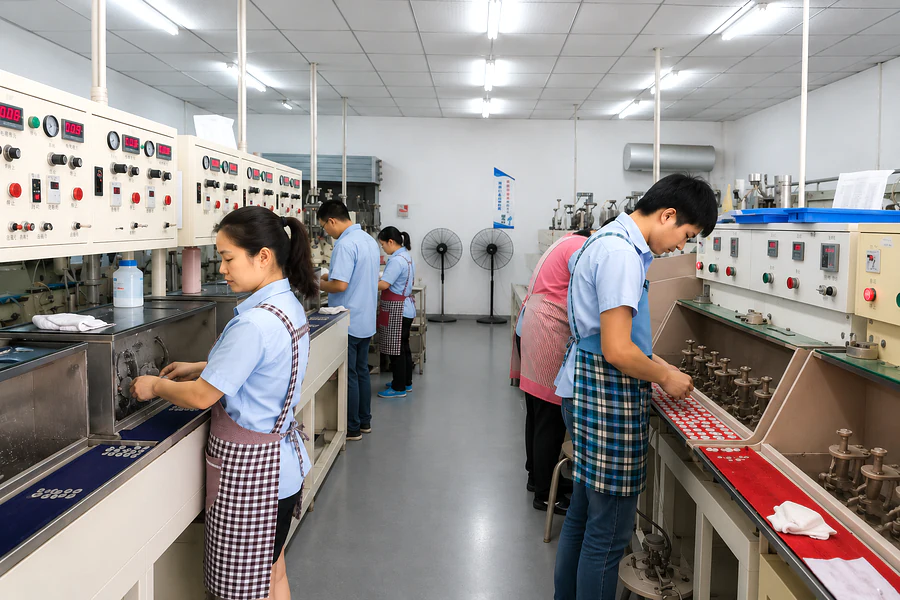
Manufacturing Capability for Germanium Aspheric Lens
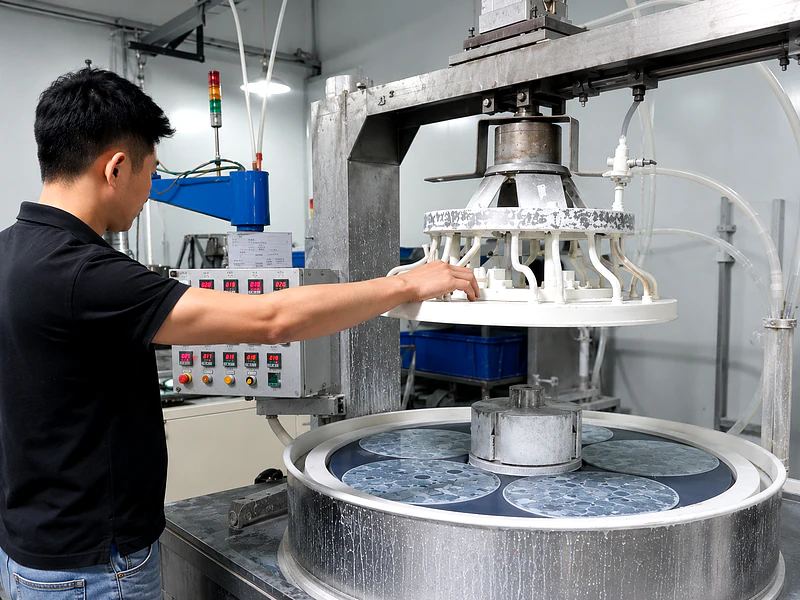
Precision Aspheric Machining
Precise machining and surface control to manage germanium's high refractive index and material characteristics.
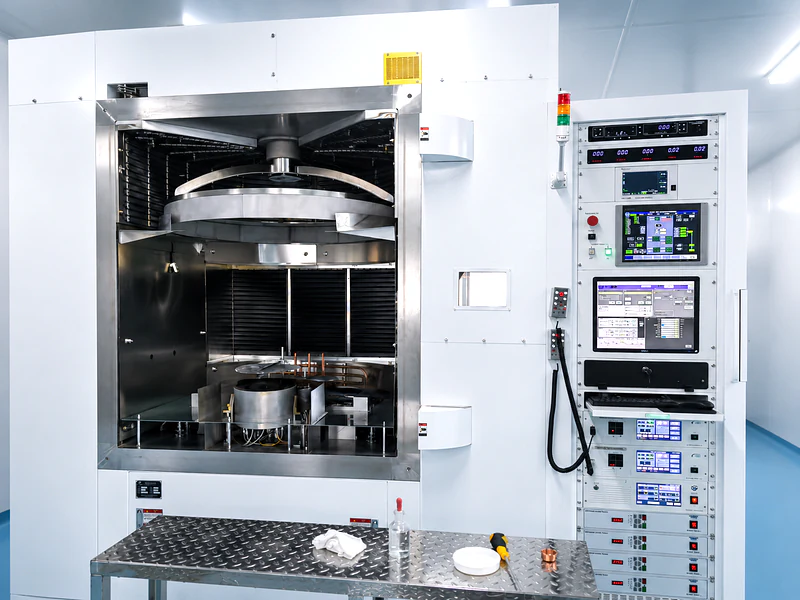
Infrared Optical Coating
MWIR AR, LWIR AR and custom infrared AR coating options for thermal imaging and IR sensing applications.
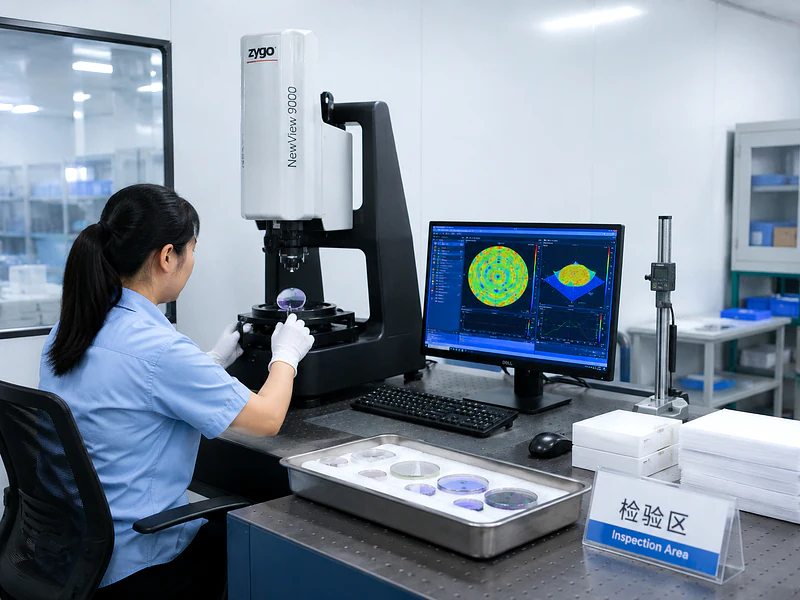
Inspection & Packaging
Dimensional inspection, aspheric profile verification, infrared optical testing and protective packaging before shipment.
Custom Manufacturing Options for Germanium Aspheric Lens
Dimensions & Aspheric Profile
Custom diameter, focal length and aspheric surface profile can be manufactured according to customer drawings and optical design requirements.
Surface & Optical Quality
Surface accuracy, surface quality and aberration control can be selected according to MWIR or LWIR imaging performance requirements.
Coating & Environmental Design
Uncoated, MWIR AR, LWIR AR and custom infrared AR coatings can be specified for thermal imaging, surveillance or laser applications.
Infrared Lens Material Comparison
| Germanium (Ge) | Silicon (Si) | Chalcogenide Glass | Zinc Selenide (ZnSe) | |
|---|---|---|---|---|
| Transmission | LWIR, approx. 2 – 14 μm | MWIR, approx. 1.2 – 8 μm | MWIR to LWIR, approx. 1 – 14 μm | MWIR to LWIR, approx. 0.6 – 16 μm |
| Refractive Index | Approx. 4.0, very high | Approx. 3.4 | Approx. 2.4 – 2.8, composition dependent | Approx. 2.4 |
| Mechanical Notes | Hard, brittle, sensitive to thermal runaway at elevated temperature | Hard, brittle, good thermal stability | Moldable, good for volume production, relatively soft | Moderate hardness, low absorption, sensitive to handling |
| Typical Use | LWIR thermal imaging, uncooled camera lenses | MWIR imaging, low-cost thermal optics | Molded aspheric IR optics, compact thermal lenses | CO2 laser optics, broadband IR imaging |
Applications of Germanium Aspheric Lens
Thermal Imaging Systems
Aberration-corrected infrared focusing for thermal imaging.
Infrared Cameras
Compact, high-performance optics for IR camera modules.
Night Vision Systems
High infrared transmission for night vision optics.
IR Sensor Modules
Precision focusing for infrared sensing applications.
Infrared Detection Equipment
Reliable germanium optics for infrared detection instruments.
Laser Systems
Infrared-transmitting aspheric optics for laser applications.
Germanium Aspheric Lens FAQ
Why is germanium used for infrared lenses?
Germanium provides excellent infrared transmission from approximately 2–14 μm and a high refractive index, making it suitable for compact infrared optical designs.
What wavelength range do germanium aspheric lenses support?
Germanium aspheric lenses are commonly used for MWIR (3–5 μm) and LWIR (8–12 μm) infrared applications.
What is the advantage of an aspheric germanium lens?
The aspheric surface reduces spherical aberration and improves infrared imaging performance compared with conventional spherical lenses.
Can germanium aspheric lenses be customized?
Yes. Diameter, focal length, aspheric profile, AR coating, and optical specifications can be customized.
What information should I provide for a quotation?
Please provide diameter, focal length, aspheric profile requirement, coating requirement, quantity and drawing if available.
Where can I learn more about infrared optical materials?
Additional infrared optical material information can be found from Edmund Optics.
Related Products for Germanium Aspheric Lens
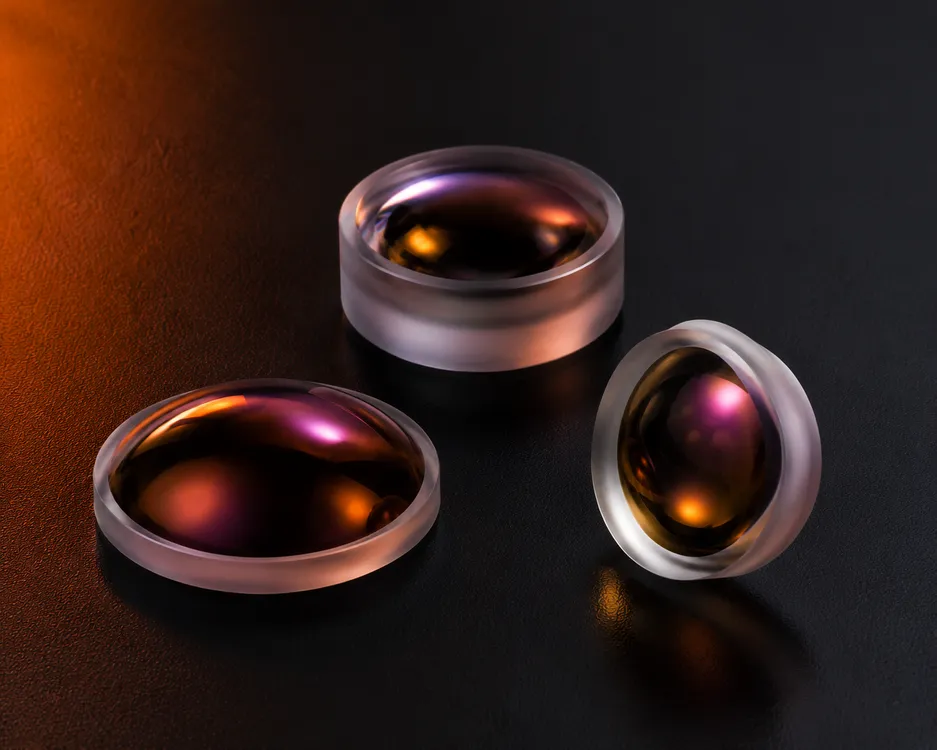
Need Custom Germanium Aspheric Lenses?
Send us your drawing, aspheric profile requirement, focal length, coating requirements and quantity. Chenyu Optics will review the optical and mechanical specifications and provide a suitable germanium aspheric lens manufacturing suggestion.