
OPTICAL MATERIAL KNOWLEDGE CENTER

Silicon Optical Material for Precision Optical Components

Silicon material solutions for infrared windows and lenses requiring lightweight design, infrared transmission and stable optical performance.

Chenyu Optics provides silicon optical material solutions and precision manufacturing capability for infrared optical systems. Silicon (Si) is widely selected for IR windows and lenses due to its lightweight properties, excellent infrared transmission and suitability for MWIR imaging and infrared sensing applications.

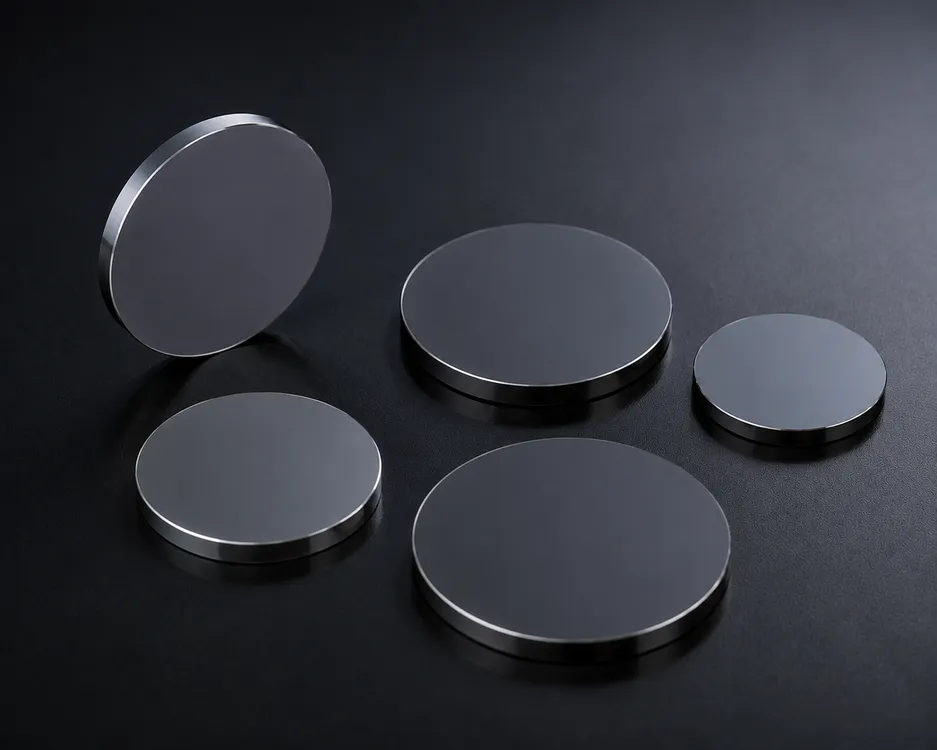
Silicon optical material and precision silicon infrared optical components

Silicon Optical Material Overview

Silicon (Si) is an infrared optical material widely used in MWIR imaging systems, infrared sensors and optical detection applications.

Its lightweight characteristics, good infrared transmission and relatively low density make it suitable for compact infrared optical systems.

Engineers commonly select silicon for infrared windows, infrared lenses, MWIR imaging systems and sensor protection components.

Chenyu Optics manufactures custom silicon optical components according to customer drawings, including IR windows, lenses and precision infrared optical parts.

Technical Parameter Typical Value Engineering Significance
Composition Silicon (Si) Single-crystal material supports lightweight MWIR components and precision infrared manufacturing.
Material Type Infrared Optical Crystal Selected and processed for consistent MWIR imaging and infrared sensing performance.
Crystal Structure Single Crystal Single-crystal structure supports precision infrared optical fabrication.
Thermal Expansion MWIR imaging and infrared sensing systems Relevant to compact MWIR cameras and infrared sensor systems.
Transmission Approx. 1.2–15 μm Supports useful MWIR transmission for imaging and sensing systems.
Density Approx. 2.33 g/cm³ Relevant to component weight, mounting and precision optical assembly design.
Refractive Index Approx. 3.42 @ 10 μm Relevant to compact infrared lens design, surface reflection and AR coating selection.
Typical Components IR windows and infrared lenses Used for lightweight MWIR windows, lenses and infrared sensing systems.

Values are general engineering references rather than guaranteed component specifications. Actual performance depends on silicon grade, wavelength, thickness, surface finish and coating.

Key Properties of Silicon Material

Silicon is selected when lightweight design, MWIR transmission and stable infrared optical performance are required.

Lightweight Infrared Material

Silicon provides lower density compared with many infrared optical crystals, supporting lightweight optical system designs.

MWIR Transmission Performance

Silicon provides useful infrared transmission for MWIR imaging and sensing applications.

High Optical Stability

Optical-grade silicon provides stable performance for infrared optical systems.

Precision Lens Capability

Silicon can be manufactured into infrared lenses for imaging and detection systems.

Cost-Effective Infrared Solution

Silicon offers a practical balance between infrared performance, availability and component cost.

Property System Benefit Design Consideration
Low DensitySupports lightweight optical systemsComponent geometry and mounting should match mechanical loads.
MWIR TransmissionSupports imaging and sensing systemsConfirm the detector band and total transmission target.
Optical StabilitySupports reliable infrared performanceTemperature, mounting and coating should be evaluated.
Precision Lens CapabilitySupports compact IR imaging designsRadius, centration, surface quality and coating require control.
Practical Material BalanceBalances performance, availability and costSelect grade and tolerances according to system requirements.

How to Select Silicon Optical Material

Engineers should select silicon by evaluating MWIR wavelength coverage, weight, optical quality, coating and environmental requirements together.

Choose Silicon When

Lightweight infrared components are required
The system benefits from lower material density.
MWIR transmission is needed
The component operates in a compatible mid-wave infrared band.
Compact infrared imaging systems are designed
The optical assembly requires efficient size and weight control.
IR windows or lenses require stable performance
The component must provide consistent imaging or sensor transmission.

Consider Alternatives When

Long-wave infrared performance is required
Consider germanium.
CO2 laser optics at 10.6 μm are required
Consider ZnSe.
Higher environmental durability is required
Consider sapphire or ZnS.
Broad UV transmission is required
Consider fused silica or CaF2.
Selection Step Question Information Required
1. Wavelength Does calcium fluoride transmit the complete operating band? Minimum wavelength, maximum wavelength and transmission target
2. Environment What UV and infrared performance is required? UV cutoff, infrared limit, absorption target and operating environment
3. Mechanical Load What mechanical and thermal conditions must the component withstand? Pressure, impact, aperture, thickness and mounting method
4. Optical Quality How precisely must the component control the beam? Surface quality, flatness, parallelism and transmitted wavefront
5. Coating Is reduced surface reflection required? Wavelength, bandwidth, angle of incidence and operating environment

Silicon Compared with Other Optical Materials

Preliminary comparison for engineers selecting materials by optical range, environmental performance and application.

Material Main Advantage Typical Transmission Range Application Suitability
SiliconLightweight infrared optical material1.2–15 μmMWIR windows and lenses
GermaniumHigh refractive index and LWIR performance2–14 μmThermal imaging lenses
ZnSeExcellent CO2 laser transmission0.5–16 μmCO2 laser windows and lenses
ZnSDurable broadband infrared transmission0.4–14 μmMWIR/LWIR windows and domes
SapphireHigh hardness and environmental durability0.17–5.5 μmProtective optical windows

Transmission ranges are approximate and vary by material grade, thickness and coating. Fused silica is generally preferred for UV transmission and low thermal expansion; alternative materials may be better for greater hardness or longer infrared wavelengths.

Silicon Optical Applications

Silicon is used for MWIR windows, lenses, infrared sensors, thermal imaging and scientific IR instruments.

IW

Silicon Infrared Windows

Silicon windows provide infrared transmission protection for MWIR sensors and imaging systems.

IL

Silicon Infrared Lenses

Silicon lenses support compact MWIR imaging and infrared focusing applications.

TI

Thermal Imaging Systems

Silicon optical components are used in infrared cameras and detection systems.

IS

Infrared Sensors

Silicon windows and lenses provide optical interfaces for infrared sensing equipment.

SI

Scientific Infrared Instruments

Silicon components support infrared measurement and analytical optical systems.

Application Primary Silicon Function Important Specification
Silicon IR WindowMWIR transmission and sensor protectionWavelength, thickness, flatness and coating
Silicon IR LensCompact imaging and infrared focusingFocal length, centration, surface quality and coating
Thermal Imaging SystemInfrared image formationDetector band, wavefront and temperature range
Infrared SensorProtective or powered optical interfaceOperating band, geometry, sealing and coating
Scientific IR InstrumentInfrared measurement and analysisSpectral range, optical quality and surface finish

Custom Silicon Manufacturing Capability

Chenyu Optics manufactures custom silicon IR windows, lenses and optical components according to drawings, wavelengths and operating requirements.

Precision Machining

Custom silicon IR windows and lenses are manufactured according to customer drawings.

Optical Polishing

Precision polishing is provided for silicon infrared optical surfaces.

Custom Dimensions

Round, rectangular and custom-geometry components are available.

Surface Quality Control

Surface quality, flatness and dimensional accuracy are controlled.

IR AR Coating Options

Anti-reflection coatings are optimized for infrared wavelengths.

Component Parameter Available Configuration Specification Basis
Geometry Round, square, rectangular or custom Component function and assembly interface
Dimensions Custom to drawing Material availability and manufacturability review
Surface Quality Precision optical finish Imaging, sensing, laser and transmission requirements
Flatness Custom optical specification Wavelength, aperture and wavefront requirement
Parallelism Controlled to drawing Beam deviation and alignment requirements
Coating AR or BBAR options Wavelength, bandwidth, angle and environment

Silicon Optical Windows

Precision silicon windows for MWIR imaging and sensing systems.

EXPLORE SILICON WINDOWS

Silicon Optical Lenses

Custom silicon lenses for compact infrared imaging and focusing.

EXPLORE SILICON LENSES

Infrared Optical Components

Precision components for compatible infrared wavelength bands.

EXPLORE INFRARED OPTICS

Custom Optical Components

Drawing-defined optical parts for OEM infrared assemblies.

EXPLORE CUSTOM COMPONENTS

Silicon Optical Material Engineering FAQ

What is silicon optical material?

Silicon is a single-crystal infrared material used for lightweight MWIR windows, lenses and sensing components.

What wavelength range does silicon transmit?

Optical-grade silicon typically provides useful infrared transmission from approximately 1.2 to 15 μm, with application performance depending on grade, thickness, wavelength and coating.

Why is silicon used for infrared windows?

Silicon combines useful MWIR transmission with relatively low density, supporting compact protective windows for infrared sensors and imaging systems.

Can silicon be manufactured into infrared lenses?

Yes. Silicon can be machined and polished into drawing-defined infrared lenses with controlled radius, centration, surface quality and coating.

What is the difference between silicon and germanium optics?

Silicon is lighter and commonly used for MWIR systems, while germanium offers strong MWIR/LWIR transmission and a higher refractive index. Selection depends on wavelength, weight, temperature and design.

Can Chenyu Optics manufacture custom silicon optical components?

Yes. Chenyu Optics manufactures custom silicon windows and lenses with drawing-defined dimensions, optical tolerances, surface quality and infrared coating requirements.

Need a Custom Silicon Optical Solution?

Chenyu Optics manufactures silicon IR windows and lenses according to drawings, wavelength requirements and application specifications for infrared imaging and optical systems.

Scroll to Top