
Silicon Optical Windows
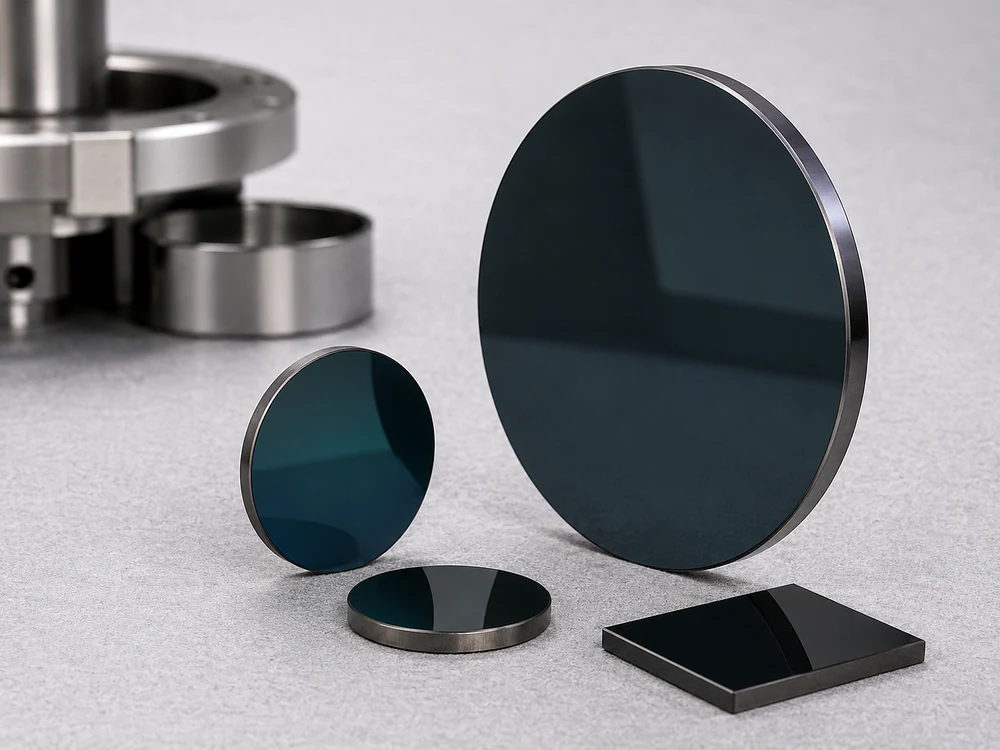
Silicon Optical Windows are custom infrared components used in MWIR cameras, infrared sensors, laser systems and lightweight optical assemblies. Chenyu Optics manufactures Silicon Optical Windows uncoated or with AR, BBAR, dual-band AR and DLC protective coatings.
Silicon Optical Windows Overview
Silicon Optical Windows are precision infrared optical components used to transmit near-infrared and mid-wave infrared wavelengths while protecting sensors, detectors and optical assemblies from external environments.
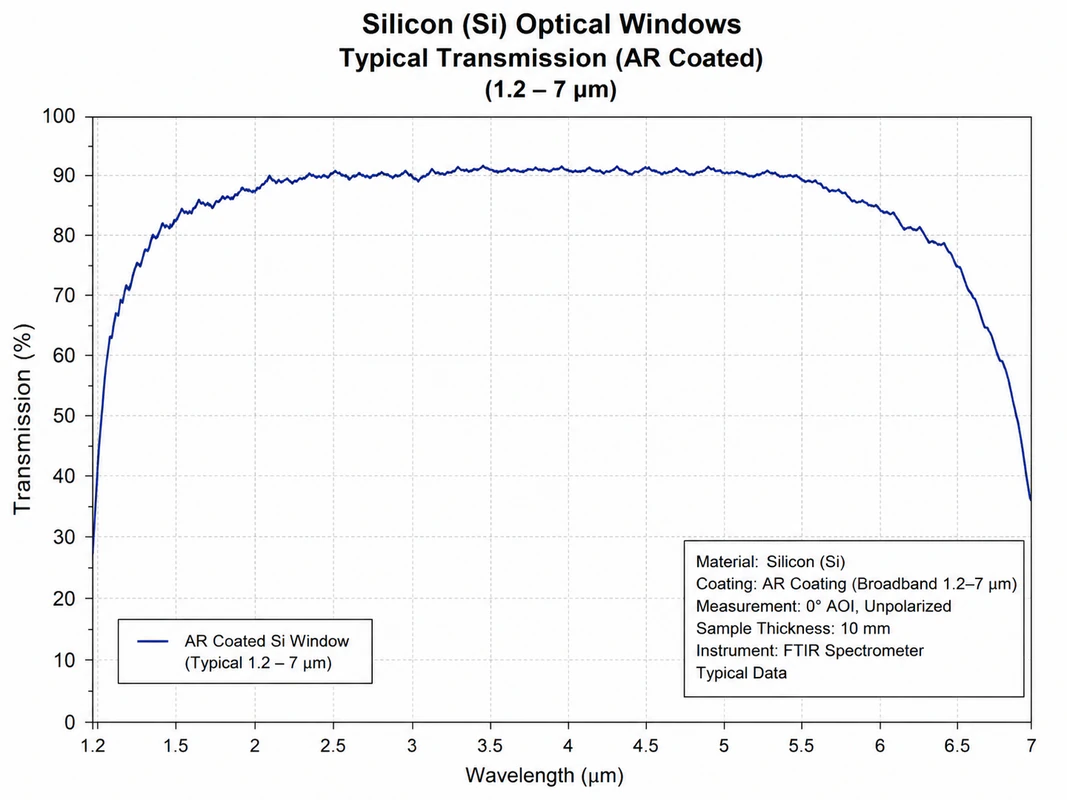
Silicon (Si) is commonly selected for MWIR optical systems because it provides useful transmission from approximately 1.2 μm to 7 μm, with low density, high hardness and good thermal conductivity. It is opaque in the visible spectrum, which helps reduce visible stray light in infrared detection systems.
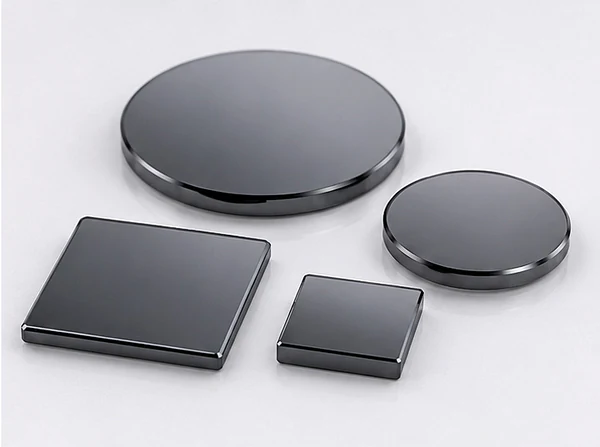
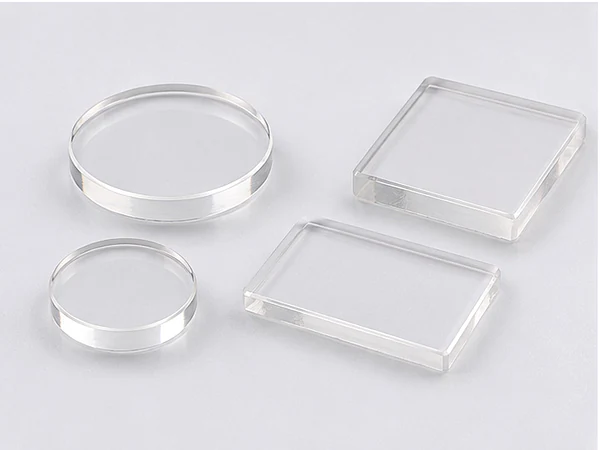
Chenyu Optics supports custom Silicon window manufacturing according to customer drawings, including round, square, rectangular and special-shaped components. Surface quality, flatness, parallelism, thickness, chamfer, clear aperture and coating design can be specified for prototype and repeat production.
Key Advantages of Silicon Optical Windows
MWIR Imaging & Sensor Protection
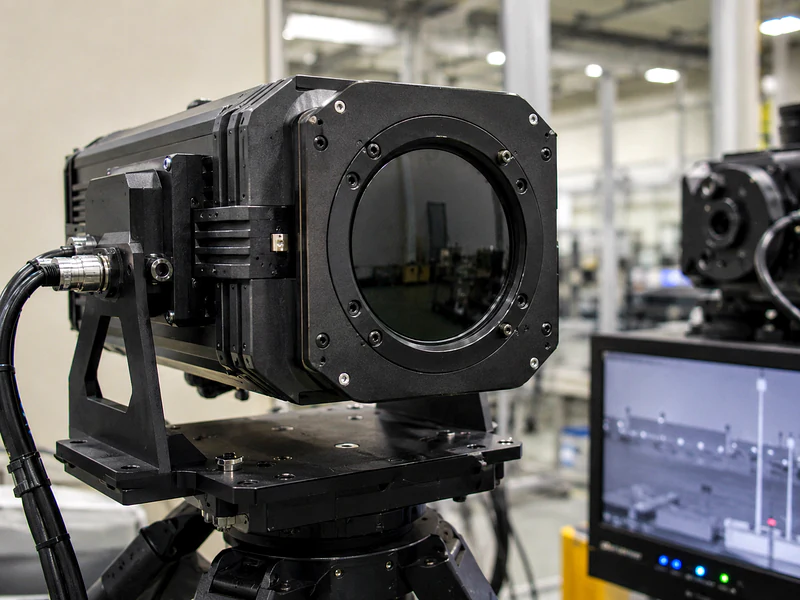
Silicon windows are widely used as lightweight protective or internal optical elements in MWIR cameras, infrared sensor modules, laser systems and industrial monitoring equipment.
Typical Specifications of Silicon Optical Windows
| Material | Optical Grade Silicon / Si |
|---|---|
| Material Type | Monocrystalline or polycrystalline Silicon |
| Transmission Range | Approx. 1.2 – 7 μm, depending on material grade, thickness and coating |
| Refractive Index | Approx. 3.422 @ 4 μm |
| Density | Approx. 2.33 g/cm³ |
| Knoop Hardness | Approx. 1150 kg/mm² |
| Thermal Conductivity | Approx. 163 W/m·K |
| Surface Quality | 20-10, 40-20, 60-40 or custom |
| Surface Flatness | Up to λ/10 @ 10.6 μm or drawing-based |
| Parallelism | ≤ 30 arcsec, ≤ 3 arcmin or custom |
| Diameter / Size | Custom round, square, rectangular or special-shaped windows |
| Thickness Tolerance | ±0.1 mm, ±0.05 mm or custom |
| Clear Aperture | ≥90% of diameter or drawing-based |
| Chamfer | 0.1 – 0.3 mm × 45° or drawing-based |
| Coating Options | Uncoated, AR, BBAR 3–5 μm, dual-band AR, DLC protective coating, custom coating |
Optical Transmission Characteristics of Silicon Optical Windows
Why Choose Chenyu Optics for Silicon Optical Windows
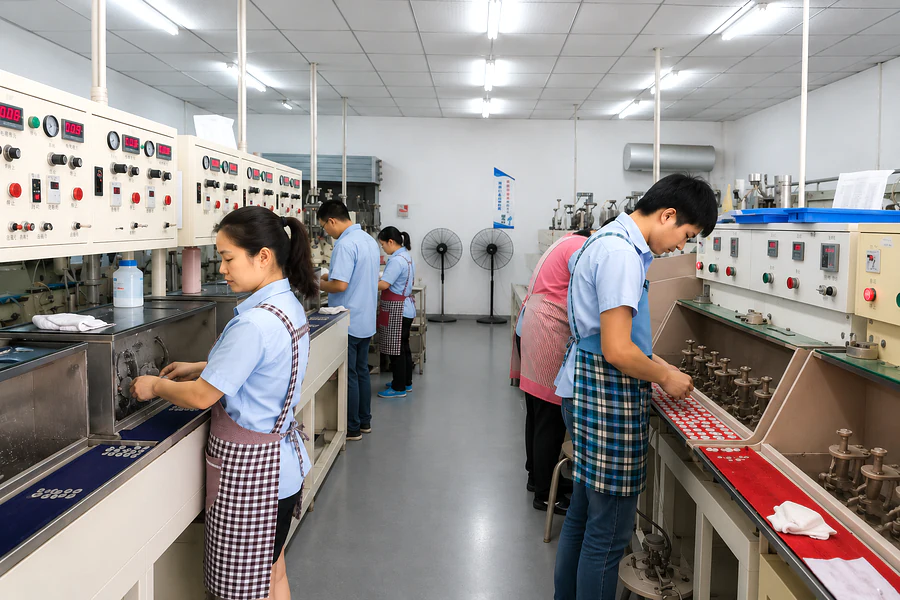
Chenyu Optics focuses on drawing-based infrared optical component manufacturing for industrial, imaging and precision optical systems. We support prototype verification, small-batch production and repeat manufacturing for non-standard Silicon optical windows.
Manufacturing Capability for Silicon Optical Windows
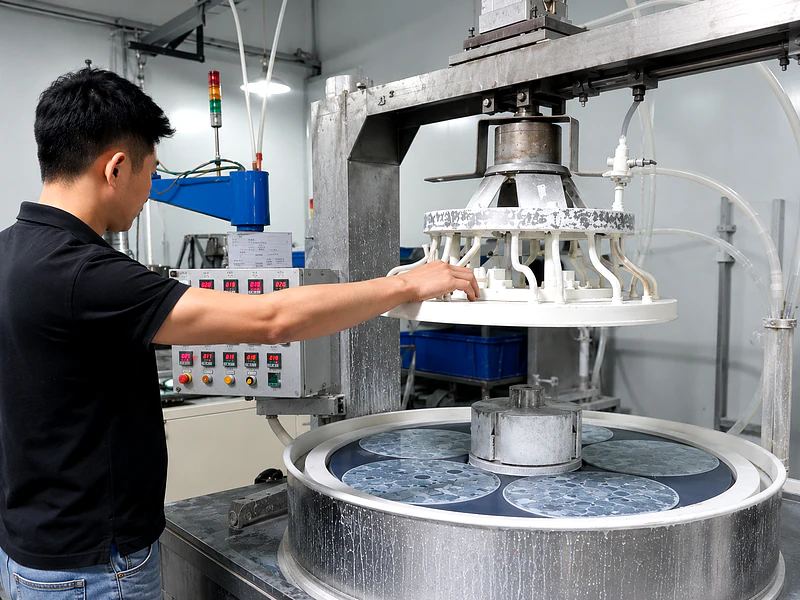
Precision Polishing
Controlled lapping and polishing for flatness, surface quality, wedge control and low-scatter MWIR optical surfaces.
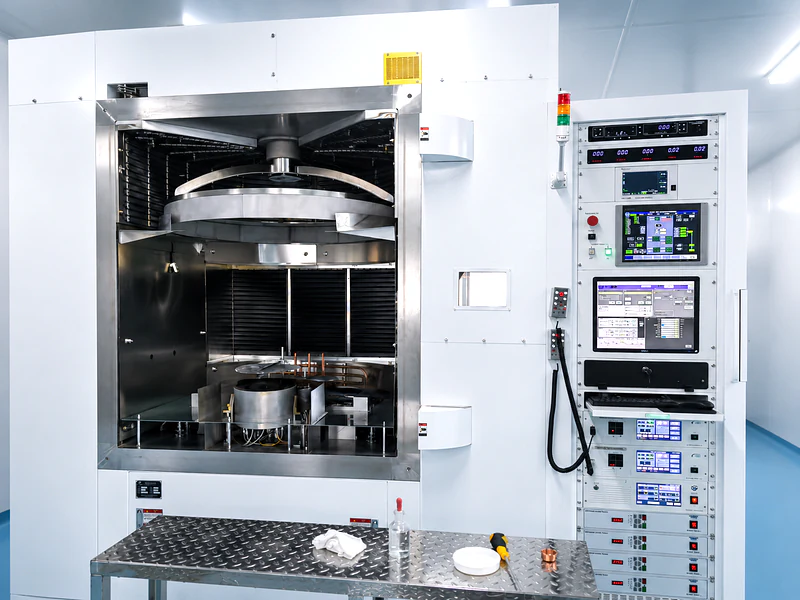
Optical Coating
AR, BBAR, dual-band AR and DLC coating options for MWIR transmission and external-facing infrared window applications.
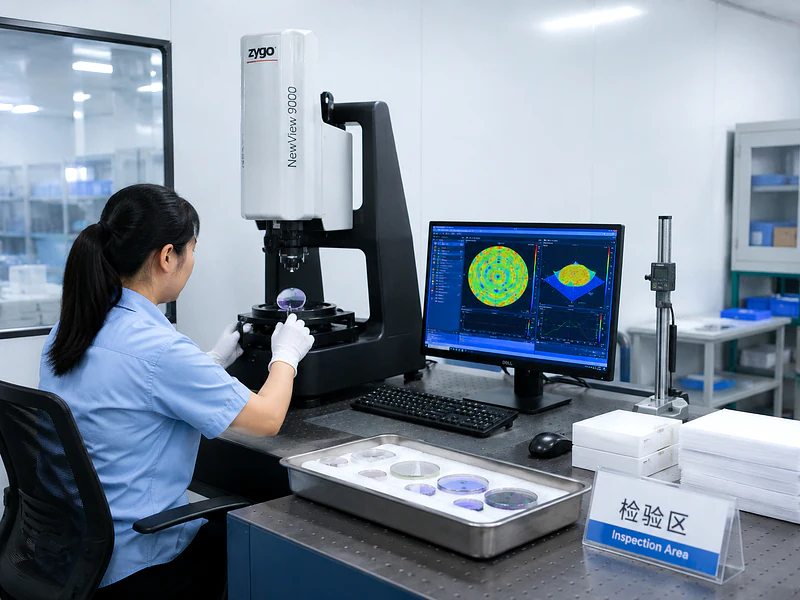
Inspection & Packaging
Dimensional inspection, surface review, optical performance checking and clean protective packaging before shipment.
Custom Manufacturing Options for Silicon Optical Windows
Dimensions & Geometry
Round, square, rectangular, wedged and special-shaped Silicon windows can be manufactured according to customer drawings, including custom clear aperture, edge form and mounting requirements.
Surface & Mechanical Quality
Surface quality, flatness, parallelism, wedge, chamfer and dimensional tolerances can be selected according to imaging performance, sealing method and assembly structure.
Coating & Wavelength Design
Uncoated, single-band AR, broadband AR, dual-band AR and DLC protective coatings can be specified for MWIR, laser or field-exposed systems.
Silicon Optical Windows Material Comparison
| Silicon (Si) | Germanium (Ge) | Zinc Selenide (ZnSe) | Sapphire | Calcium Fluoride (CaF₂) | |
|---|---|---|---|---|---|
| Transmission | NIR to MWIR, approx. 1.2 – 7 μm | MWIR to LWIR, approx. 2 – 14 μm | Visible to far IR, commonly 0.6 – 20 μm | UV to MWIR, commonly 0.2 – 5.5 μm | UV to MWIR, commonly 0.18 – 8 μm |
| Visible Transmission | Opaque in visible wavelengths | Opaque in visible wavelengths | Transmits visible red and infrared wavelengths | High visible transmission | High visible transmission |
| Mechanical Notes | Lightweight, hard and thermally conductive | High density, good rigidity, brittle material | Softer material, requires careful handling | Very hard and chemically durable | Lower hardness, sensitive to thermal shock |
| Typical Use | MWIR windows, IR filters, lightweight assemblies | Thermal imaging windows, LWIR optics, IR sensors | CO₂ laser optics, IR windows, multispectral optics | Protective windows, harsh environment optics | UV, visible, NIR and MWIR optical systems |
Applications of Silicon Optical Windows
MWIR Imaging
Protective windows for infrared imaging systems operating in the 3–5 μm band.
Infrared Cameras
Lightweight window components for MWIR cameras and sensor assemblies.
Infrared Sensors
Protective optical windows for gas sensing, flame detection and industrial IR modules.
Laser Systems
Silicon substrates for mid-infrared laser windows, mirrors and beam control optics.
Aerospace Optics
Lightweight infrared windows for airborne payloads, gimbals and compact optical systems.
Industrial Monitoring
MWIR windows for process control, temperature monitoring and non-contact inspection systems.
Silicon Optical Windows FAQ
What wavelength range do Silicon optical windows transmit?
Silicon optical windows are commonly used from approximately 1.2 μm to 7 μm. Actual transmission depends on material quality, thickness, coating design, surface quality and measurement conditions.
Why are Silicon optical windows used for MWIR systems?
Silicon combines useful MWIR transmission, low density, high hardness and good thermal conductivity. It is a practical choice for 3–5 μm infrared imaging and lightweight sensor assemblies.
Can Silicon optical windows be used for LWIR thermal imaging?
Silicon is not suitable for 8–12 μm LWIR transmission because useful transmission decreases strongly beyond approximately 7 μm. Germanium is normally selected for LWIR systems.
Do Silicon optical windows require AR coating?
AR or BBAR coating is recommended for most imaging systems because Silicon has a high refractive index and uncoated surfaces have significant Fresnel reflection loss.
Is DLC coating available for Silicon optical windows?
Yes. DLC coating can be applied when the external surface requires improved abrasion resistance, environmental durability and protection against harsh operating conditions.
What information should I provide for a quotation?
Please provide diameter or size, thickness, clear aperture, surface quality, flatness, parallelism, coating requirement, quantity, operating wavelength and drawing if available.
Where can I learn more about infrared optical materials?
Additional infrared material information can be found from Edmund Optics.
Related Products for Silicon Optical Windows


Need Custom Silicon Optical Windows?
Send us your drawing, wavelength range, size, thickness, coating requirements and quantity. Chenyu Optics will review the optical and mechanical specifications and provide a suitable Silicon window manufacturing suggestion.