Product Overview
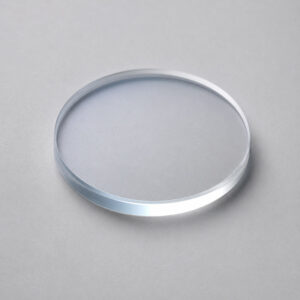
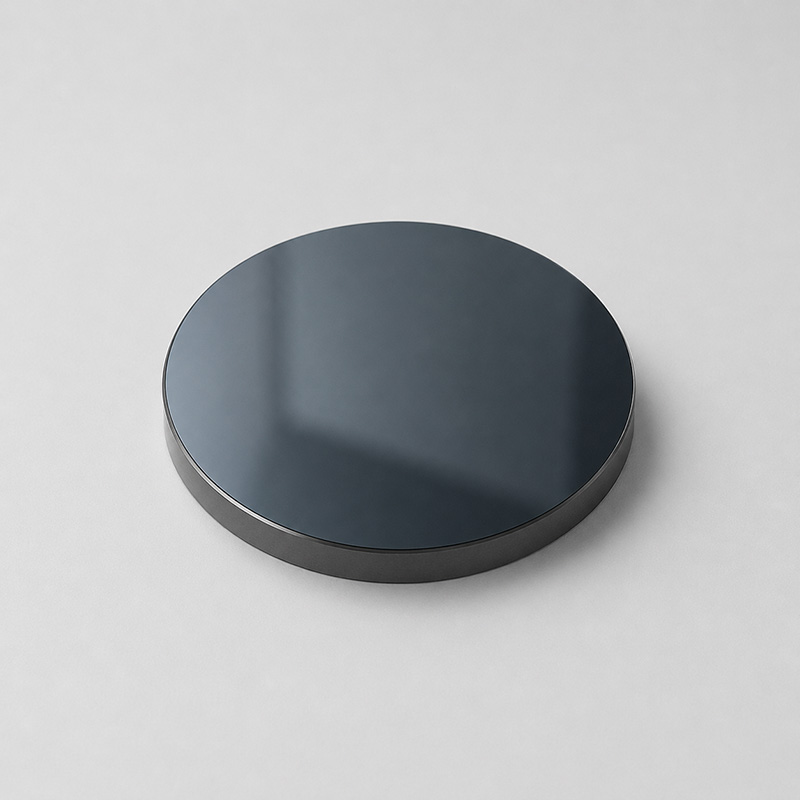
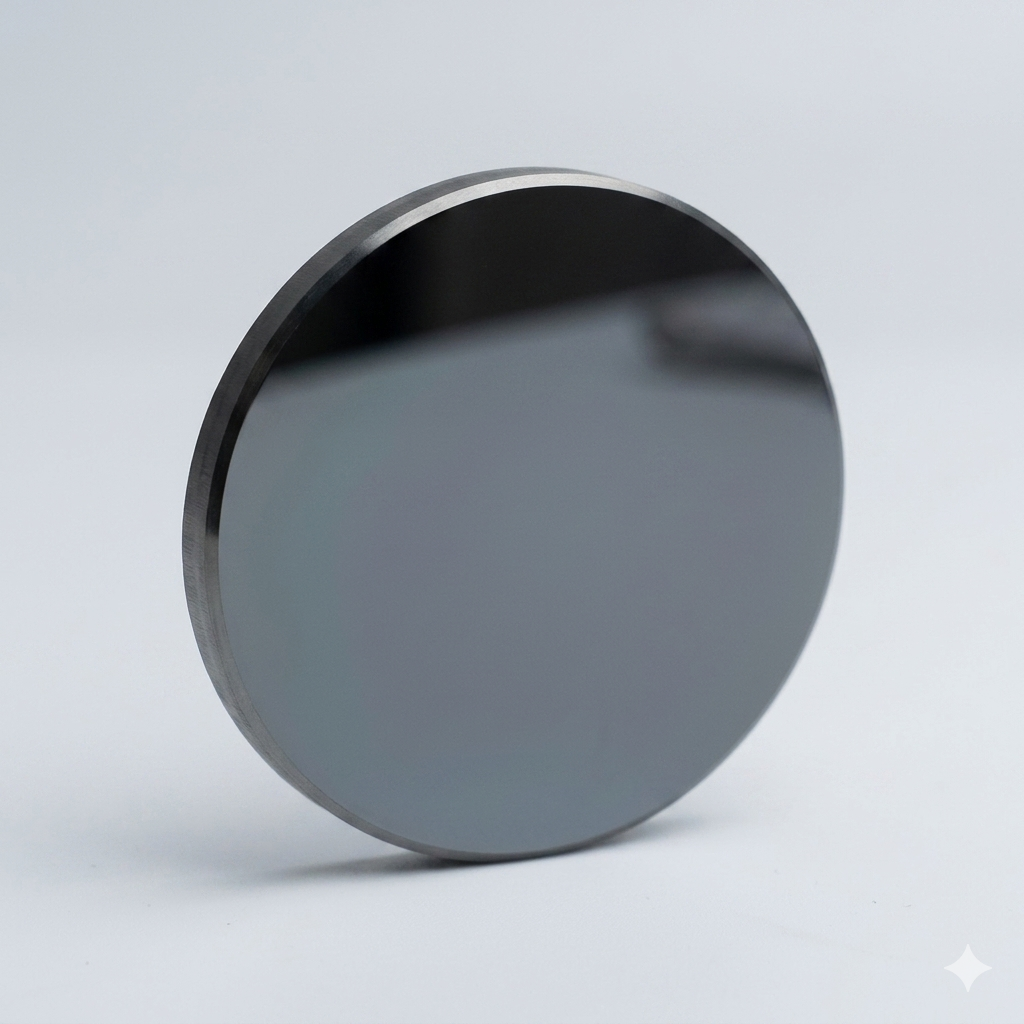
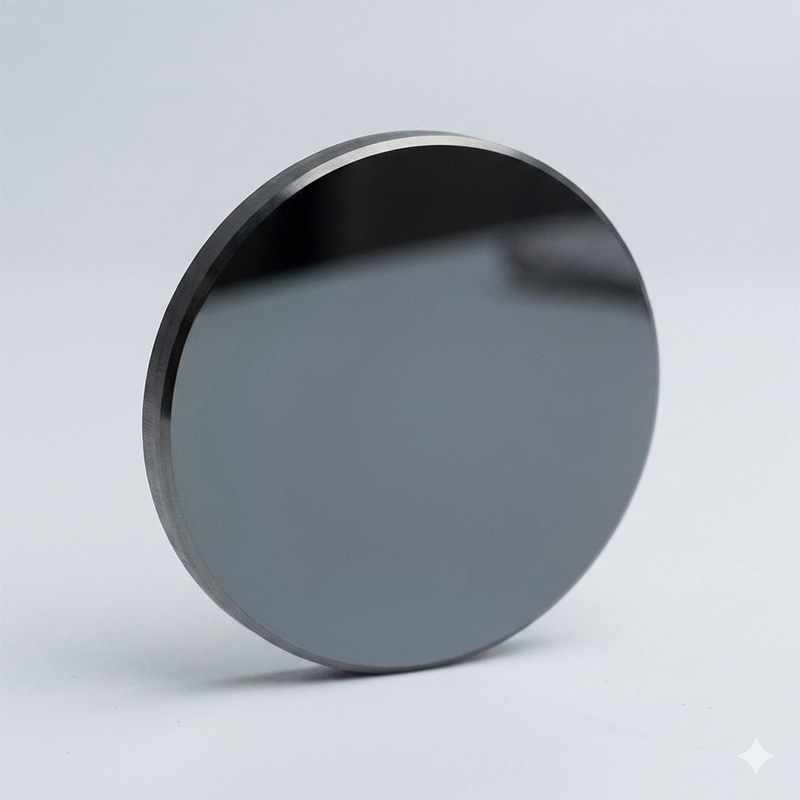
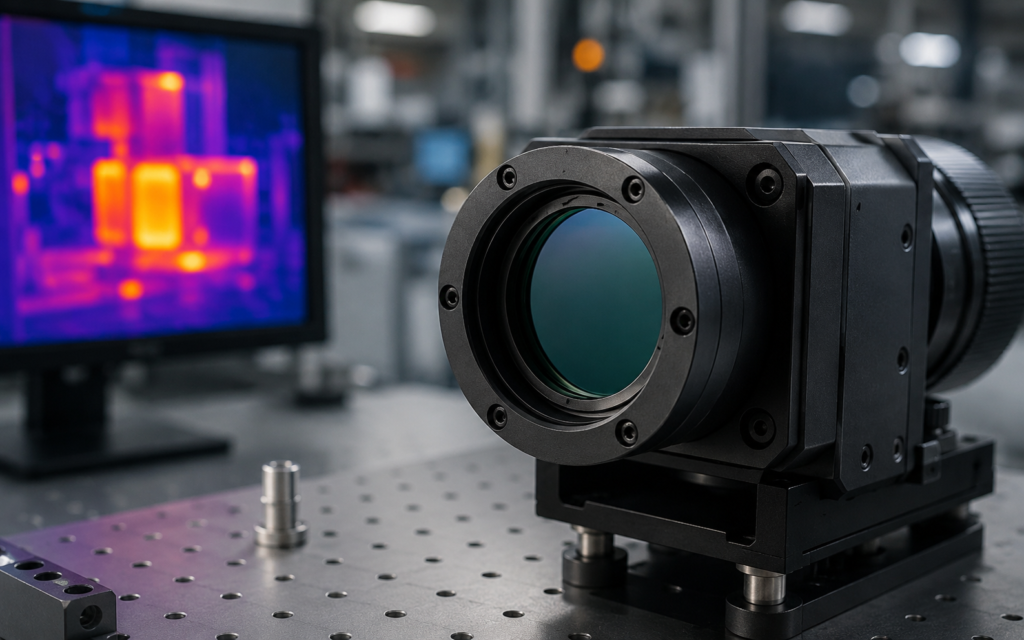
Silicon is a widely used infrared optical material for MWIR applications, especially in the 3–5 μm wavelength range. It is commonly selected for infrared windows, sensors, and thermal imaging systems where weight, thermal stability, and cost control are important.
Compared with Germanium, Silicon has a much lower density and better thermal conductivity. This makes it suitable for handheld infrared devices, lightweight optical systems, and aerospace-mounted infrared assemblies.
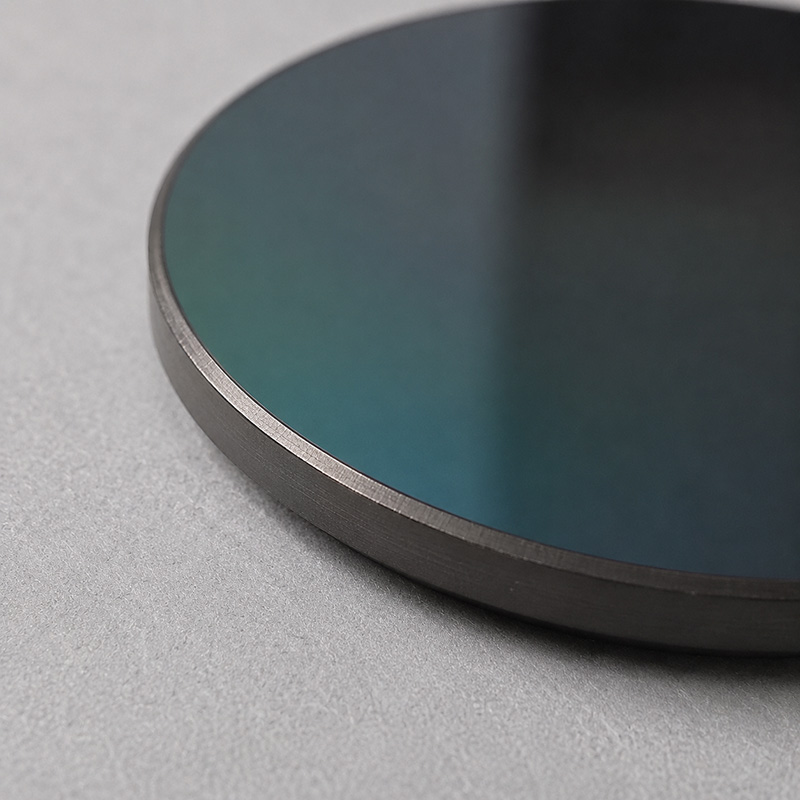
Silicon is opaque in the visible range but transmits well in the near-infrared and mid-wave infrared regions. For most MWIR applications, AR coating is recommended to reduce surface reflection and improve optical transmission.
Typical Specifications
| Parameter | Specification |
|---|---|
| Material | Optical Grade Silicon (Si) |
| Spectral Range | 1.2 – 7 μm |
| Optimized Waveband | 3 – 5 μm (MWIR) |
| Refractive Index | ~3.42 @ 5 μm |
| Density | 2.33 g/cm³ |
| Knoop Hardness | 1150 kg/mm² |
| Surface Quality | 60/40 to 20/10 |
| Surface Flatness | Up to λ/10 |
| Coating Options | AR / DLC coating available |
| Applications | MWIR imaging, infrared sensors, thermal optics |
Key Features
✓ Efficient transmission from 1.2–7 μm
✓ Suitable for 3–5 μm MWIR thermal imaging systems
✓ Lower density than Germanium
✓ Good thermal conductivity
✓ High mechanical durability
✓ AR and DLC coating available
✓ Custom sizes and shapes available
Optical Transmission Characteristics
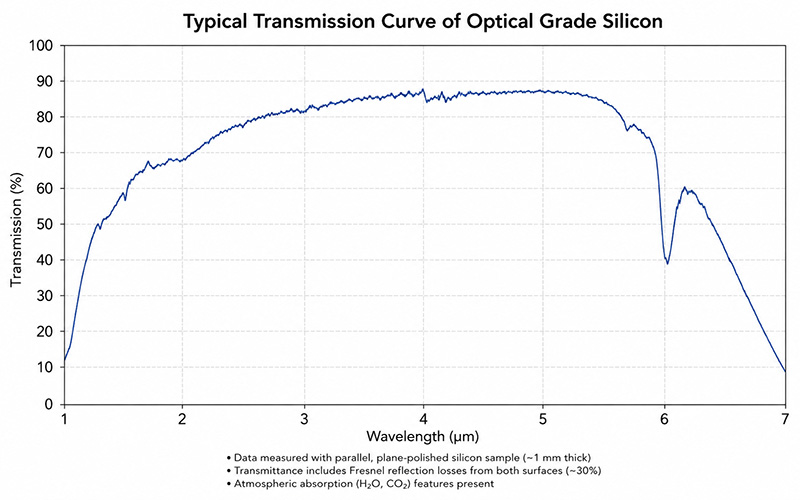
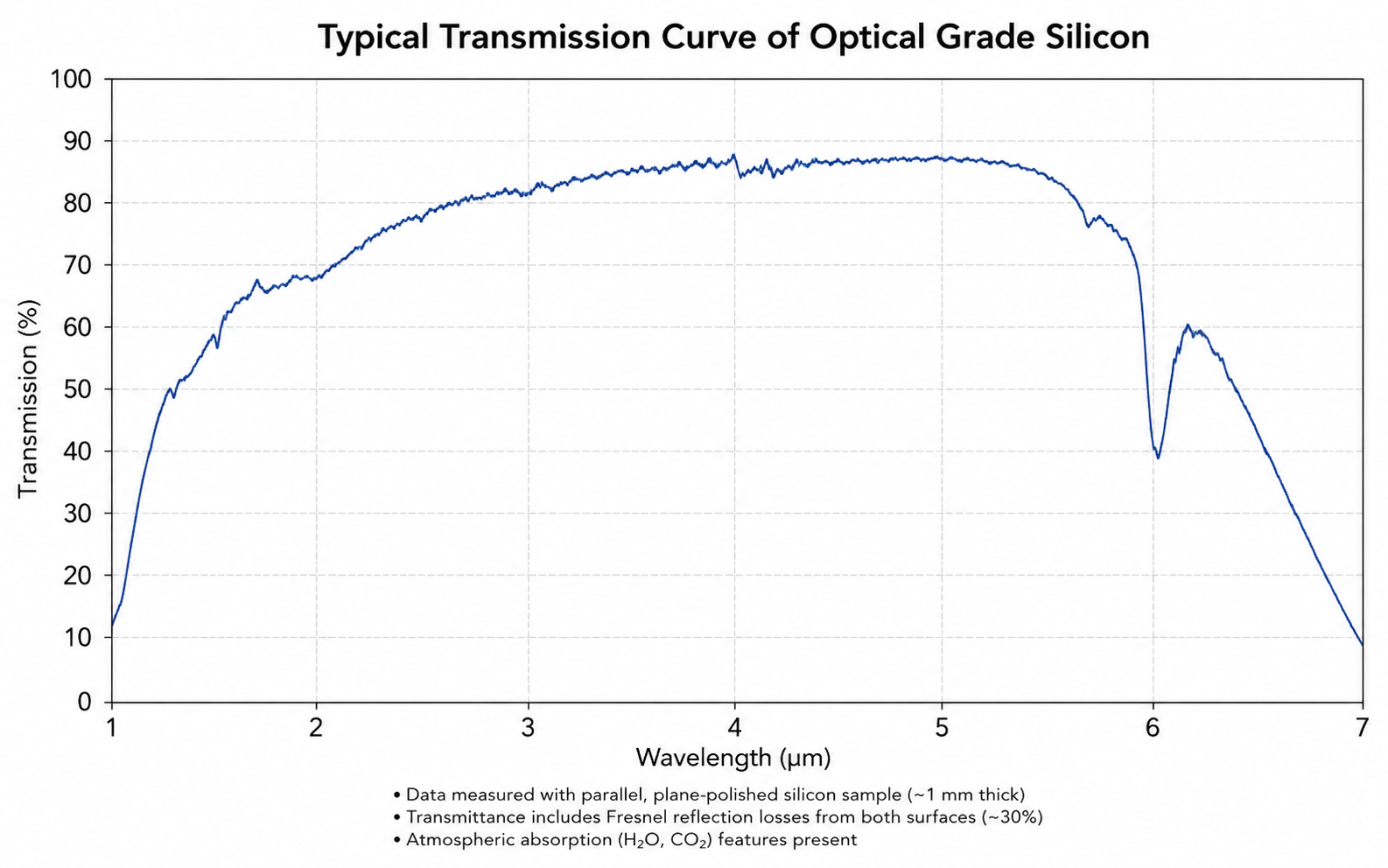
Silicon provides stable transmission performance in the 1.2–7 μm wavelength range and is widely used in MWIR optical systems operating in the 3–5 μm atmospheric window.
Due to its relatively high refractive index, AR coating is commonly applied to improve transmission efficiency and reduce Fresnel reflection losses. Actual transmission performance depends on coating design, material thickness, surface quality, and operating wavelength range.
Applications
- MWIR thermal imaging systems
- Infrared cameras and sensors
- Industrial infrared inspection systems
- Infrared laser systems
- Lightweight aerospace optics
- Protective infrared windows
Manufacturing Capabilities
| Capability | Available Range |
|---|---|
| Diameter | 5–300 mm |
| Thickness | 0.5–50 mm |
| Surface Quality | 60/40 to 20/10 |
| Surface Flatness | Up to λ/10 |
| Coating | AR / DLC available |
| Custom Shapes | Round, square, rectangular, custom |
Custom Manufacturing Options
✓ Custom dimensions and thickness
✓ Precision optical polishing
✓ AR and DLC coating support
✓ Prototype and small-batch production
✓ Drawing-based custom manufacturing
✓ Custom edge and chamfer processing
Materials Comparison
Compared with Germanium, Silicon offers lower density and better thermal conductivity, making it more suitable for lightweight MWIR optical systems. Germanium remains the preferred choice for LWIR 8–12 μm applications.
Compared with ZnSe, Silicon provides higher mechanical durability and hardness, while ZnSe offers broader infrared transmission including CO₂ laser wavelengths.
FAQ
What wavelength range is Silicon suitable for?
Silicon is commonly used in the 1.2–7 μm wavelength range and is especially suitable for MWIR 3–5 μm applications.
Why use Silicon instead of Germanium?
Silicon is lighter, more thermally conductive, and generally more economical than Germanium for MWIR optical systems.
Can Silicon be used for LWIR applications?
No. Silicon is not suitable for LWIR systems operating in the 8–12 μm range due to strong absorption beyond approximately 7 μm.
Is AR coating available for Silicon windows?
Yes. AR coatings can be optimized for MWIR and specific infrared wavelength requirements.
Can DLC coating be applied?
Yes. DLC coating can improve environmental durability and surface protection for harsh-environment applications.
Do you support custom manufacturing?
Yes. Custom dimensions, polishing, coatings, edge processing, and drawing-based manufacturing are available.