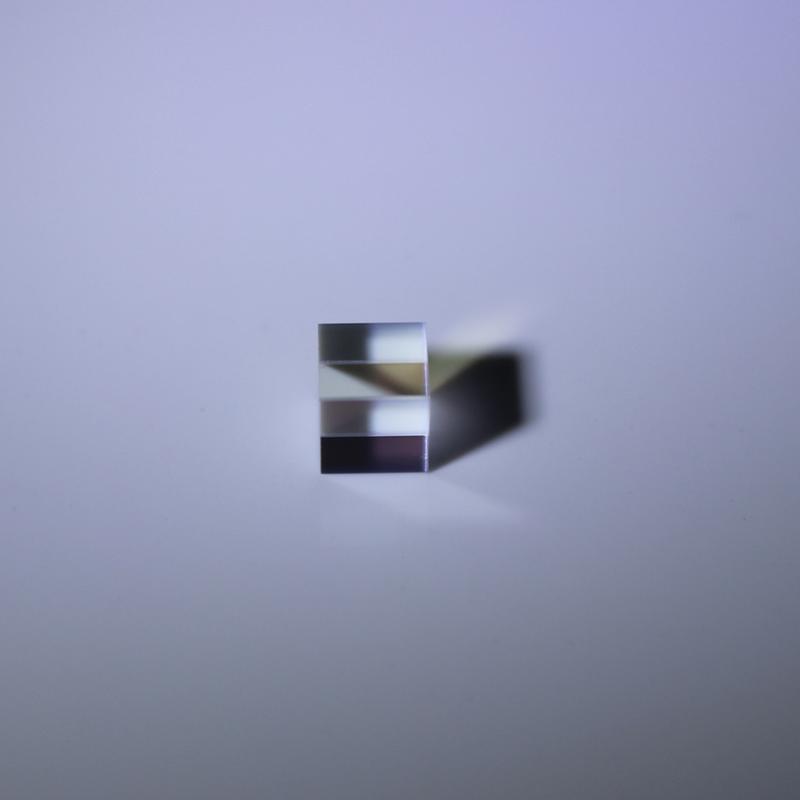
China Manufacturer Optical Beamsplitter Cube Polarizer
- P-Polarization Transmission (%): >90
- Surface Quality: 40-20
- Wavelength Range (nm): 700-1100
An Optical Beamsplitter Cube Polarizer is a precision optical component designed to split an unpolarized light beam into two beams with different polarization states.
It is formed by cementing two right-angle prisms together with a dielectric coating on the hypotenuse.
This design ensures compact size, excellent polarization separation, and high transmission efficiency.
Due to its well characteristics, people often use it in many harsh situations.
Advantages
- High Extinction Ratio: The prism can efficiently separates s-polarized and p-polarized light.
- Compact Cube Design: Easy to integrate into optical setups without beam displacement.
- Broad Wavelength Range: Available for UV, visible, and infrared applications.
- Durability: High damage threshold coatings suitable for laser applications.
Applications of Optical Beamsplitter Cube Polarizer
- Laser Systems
Beam combining, splitting, and polarization control.
- Optical Instruments
Microscopy, spectroscopy, and imaging systems.
- Telecommunications
Fiber optics, signal processing, and polarization management.
- Scientific Research
Polarization experiments, quantum optics, and optical metrology.
- Medical Devices
Endoscopes, diagnostic equipment, and laser treatment systems.